
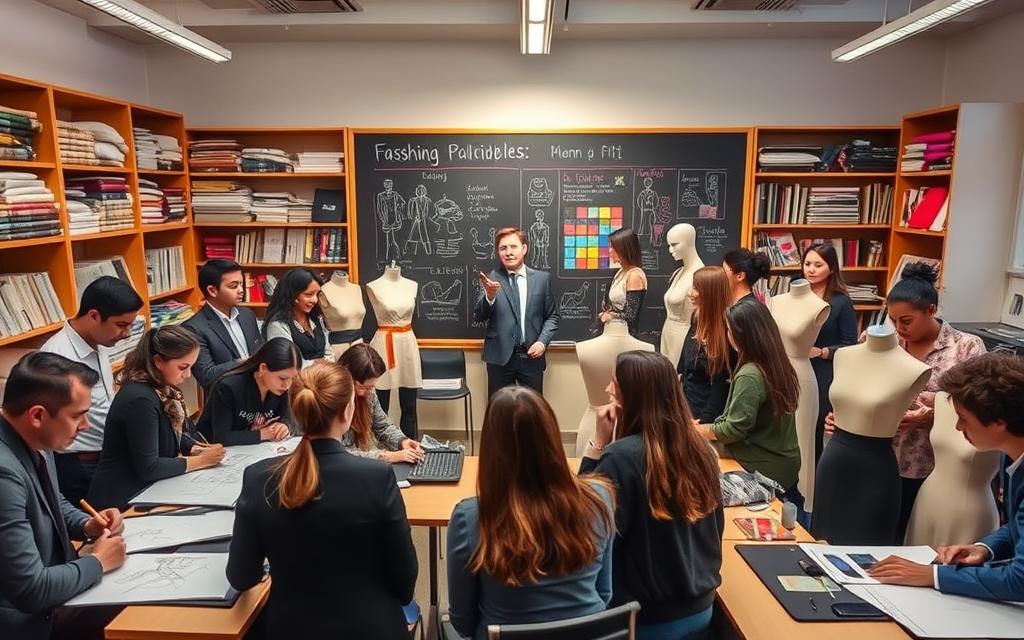

Want a fashion career? The Fashion Institute of Technology offers top-notch fashion education in the SUNY system. Our courses mix creativity with business skills.
Students get hands-on learning and industry links. Our curriculum prepares you for the real world.
Questions about fashion institute fit also connect with massachusetts institute mit world when readers compare closely related topics.
Rochester institute rit also becomes relevant when this topic is compared with nearby questions around fashion institute fit.
Our graduates do well, with 91% finding jobs within six months. This shows our focus on career education.
We offer many fashion degrees, from associate to master’s. Each course blends theory with practice.
Join our famous design school to start your creative path. We give you the skills and connections for a successful fashion career in today’s market.
The Prestigious Fashion Institute of Technology Legacy
The Fashion Institute of Technology has a nearly eight-decade legacy. It is one of the most remarkable stories in fashion education. This established institution has built an educational heritage that shapes global fashion trends and practices.
FIT’s journey shows how fashion has evolved. It has adapted to new industry demands while staying committed to excellence. The school’s fashion school legacy has launched many design careers and innovations.
Historical Foundations and Establishment
The Fashion Institute of Technology started in 1944 as a trade school. Its original goal was to train New York’s growing garment industry.
Early programmes focused on practical skills. This made FIT different from art schools and universities.
The school began when the economy was growing and the fashion industry was expanding. This was key to its early success.
From the start, FIT valued accessibility, industry relevance, and hands-on learning. These values are at the heart of FIT’s education today.
Evolution into a World-Renowned Institution
FIT grew from a trade school to a global leader. It added academic rigour to its practical training.
Degree programmes were introduced alongside certificates. This change met new industry standards and educational needs.
International partnerships and global initiatives boosted FIT’s reputation. The school attracted students and faculty from all over.
| Year | Milestone | Significance | Impact |
|---|---|---|---|
| 1944 | Institution founding | Established as trade school | Created fashion education model |
| 1951 | First degree programmes | Academic recognition | Elevated professional standards |
| 1970 | State university integration | Expanded resources | Increased programme diversity |
| 1993 | International partnerships | Global perspective | Worldwide student recruitment |
| 2010 | Digital innovation centre | Technology integration | Modernised curriculum |
Recently, FIT has adopted digital technologies and sustainable practices. It continues to lead fashion education, honouring its rich FIT history.
Today, FIT is a global fashion education leader. Its journey shows how specialisation can lead to worldwide recognition through excellence and adaptation.
Comprehensive Academic Programmes Overview
The Fashion Institute of Technology offers a wide range of educational paths. These are designed to prepare students for the global fashion industry. Our curriculum mixes creativity with technical skills and business knowledge.

Students get a balance of theory and practical experience. This ensures they have both creative vision and practical skills needed today.
Undergraduate Degrees in Fashion Design and Related Fields
FIT’s undergraduate options include Associate in Applied Science (AAS) and Bachelor of Fine Arts (BFA) degrees. These programmes give foundational knowledge and allow for specialisation in fashion disciplines.
The AAS programmes take two years and focus on essential technical skills. Popular choices include:
- Fashion Design
- Fashion Business Management
- Textile Development and Marketing
For those aiming for undergraduate degrees at the bachelor’s level, FIT offers advanced specialisations. BFA programmes build on AAS foundations, exploring design concepts and industry practices more deeply.
Our fashion design programmes have notable concentrations. These include:
- Children’s Wear
- Intimate Apparel
- Knitwear Design
- Special Occasion Design
- Sportswear
Each concentration offers dedicated studio time and mentorship from industry experts. Students create specialised portfolios that highlight their expertise.
Graduate Programmes and Specialised Concentrations
FIT’s graduate studies are for fashion professionals aiming for leadership roles. Our master’s programmes combine academic study with practical applications.
The graduate curriculum focuses on innovation, sustainability, and global perspectives. Students analyse fashion systems and develop innovative design solutions.
Master’s programmes take two years of full-time study. They include specialised coursework, independent research, and thesis projects that contribute to the fashion field.
Our academic concentrations at the graduate level allow for deep specialisation. Students can focus on areas such as:
- Fashion and Textile Studies
- Cosmetics and Fragrance Marketing
- Global Fashion Management
Tuition varies by programme level and residency status. New York state residents get reduced rates. Additional costs include materials, technology fees, and specialised equipment.
Financial planning resources help students manage costs. Programme advisors provide detailed expense breakdowns during the application process.
Admission Process and Entry Requirements
The Fashion Institute of Technology has a detailed evaluation process. It checks if you’re ready academically and creatively. Knowing the entry criteria helps you show your best side.
Academic Prerequisites and Standardised Testing
FIT sets high academic standards for all courses. You need to have finished secondary school with good grades in key subjects.
What tests you need to take depends on the course. Most undergraduate courses ask for SAT or ACT scores. Graduate programmes might need GRE scores. International students must show they can speak English well with TOEFL or IELTS.
Each programme has its own score requirements. Design courses look for high creative scores. Business courses focus on analytical skills.
Portfolio Development and Submission Guidelines
Creative programmes at FIT need a portfolio. It shows your technical skills and artistic vision. Your portfolio is a key part of your application requirements.
Make your portfolio show your best work in different media and techniques. Include 12-15 pieces that show your range and what you’re interested in.
When you submit digitally, follow certain rules. Use high-resolution JPEG or PDF formats and label everything clearly. Add descriptions for each piece explaining your creative process and ideas.
Admissions panels look at technical skill, creativity, and idea development. They want to see original thinking and solid skills.
Deadlines for submissions vary by programme and when you’re applying. Applying early can help you get scholarships.
International students need to provide extra documents. These include translated transcripts and visa materials.
Getting your portfolio submission right takes time and effort. Start preparing your materials well before the application deadline.
The FIT admission team looks at each application as a whole. They favour those with strong grades and outstanding creative work.
State-of-the-Art Campus Facilities and Resources
The Fashion Institute of Technology’s campus is a top-notch place for creativity. It has professional-grade spaces that match industry standards. This prepares students well for their future in fashion.
Students have access to cutting-edge workspaces, special equipment, and cultural collections. The school spends a lot on keeping these facilities up to date. This helps students master technical skills and be creative.

Design Studios, Laboratories, and Technical Equipment
FIT’s design studios have the latest equipment in many areas. Fashion design students use sewing machines, dress forms, and cutting tables just like big fashion houses.
The labs have tools for different creative areas. Textile labs have digital printers and looms, while accessory design studios have leather tools and 3D tech.
Students learn with both digital and old-school systems. Computer labs have software for design, 3D models, and fashion drawing.
“The facilities at FIT give students real-world experiences. Using industrial equipment from the start makes them ready for jobs.”
These spaces are open long hours for projects and trying new things. The technical team helps with using and fixing equipment.
| Resource Type | Equipment Examples | Available Programmes |
|---|---|---|
| Textile Laboratories | Digital printers, dye vats, silk screens | Textile Development, Fashion Design |
| Accessory Studios | Leather skivers, last machines, moulding equipment | Accessory Design, Fashion Design |
| Computer Laboratories | CAD systems, 3D prototyping software, Illustrator | All design programmes |
| Photography Studios | Professional lighting, backdrops, digital cameras | Photography, Fashion Business |
The Museum at FIT and Research Collections
The Museum at FIT is a top fashion museum. It has changing exhibitions and permanent collections. Students get to see fashion history and new designs up close.
It has over 50,000 items from the 18th century to now. Students learn from famous designers like Chanel and Dior.
The museum is a learning place and a cultural spot for FIT. Exhibitions cover topics like sustainability and new design trends.
Students can explore collections through special sessions and projects. Museum staff teach about making clothes, history, and how to keep things preserved.
There’s more than just clothes in the collections. Students can also find fashion plates, photos, and documents. These help with research in fashion history, merchandising, and design.
Faculty Excellence and Industry Integration
The Fashion Institute of Technology stands out because of its top-notch faculty and strong ties to the fashion world. This mix makes learning both challenging and relevant to the real world.
Distinguished Professors with Industry Experience
FIT’s power comes from its professional instructors who know the fashion industry inside out. They’re not just teachers; they’re industry leaders who have helped shape fashion.
Asta Skocir, for instance, has years of experience in luxury fashion from European design houses. She teaches students about choosing the right textiles and making clothes.
Amy Sperber, with her background in sustainable fashion consulting, teaches eco-friendly design. She shows students how big brands want sustainable designs.
These industry experienced faculty members offer students:
- Up-to-date industry insights and trends
- Hands-on skills beyond just book learning
- Chances to network with professionals
- Guidance from top fashion experts
Strategic Partnerships with Fashion Corporations
FIT has strong fashion industry partnerships that link classroom learning to real-world practice. These partnerships give students a unique look into the fashion industry.
The institute works with big names like Calvin Klein, Donna Karan, and Ralph Lauren. These partnerships open doors for students to meet industry leaders.
One key partnership is with InterContinental Hotels Group. They host design competitions where students create uniforms for hotel staff. Winners see their designs used worldwide.
These partnerships offer:
- Real-world projects to work on
- Exclusive internships
- Guidance from industry experts
- Direct job opportunities after graduation
Thanks to these partnerships, FIT students get real-world experience while studying. This prepares them to enter the workforce with the right skills and connections.
New York City Location Advantages
Studying at FIT means diving into New York City’s lively fashion scene. The school’s spot in Manhattan gives students access to top industry resources. This can’t be found anywhere else.
Students say the city is like an extra classroom. It offers chances to learn from the real world, not just in class.
Proximity to Fashion District and Industry Hubs
FIT is in Chelsea, close to the Garment District. This makes it easy to visit showrooms, fabric stores, and design studios. Students get to see the industry up close.
Emily Richardson, a fashion design student, says:
“Having Mood Fabrics and showrooms nearby changes how we work. We can find materials and see new collections right away.”
Midtown Manhattan is full of fashion businesses, making internships easy to find. Fashion weeks are right at FIT’s door. Students get to see behind the scenes.
Cultural Resources and Networking Opportunities
New York is full of museums and galleries that inspire creativity. Places like the Metropolitan Museum of Art and the Museum of Modern Art are always open for research. They add depth to what students learn in class.

The city’s social and professional scene is buzzing with chances to meet people. Events and launches happen every night. Students make connections that can lead to jobs or mentorships.
Michael Chen, a recent graduate, credits the city for his success:
“New York taught me more than any class. From museums to coffee shop chats, it’s where I made my career connections.”
The city’s energy and resources are part of the learning experience. They prepare students for careers worldwide by immersing them in the industry’s heart.
Career Development and Professional Preparation
The Fashion Institute of Technology knows that learning must lead to real success. Our professional preparation helps students make the leap from classroom to career.
Internship Programmes with Leading Fashion Brands
FIT’s fashion internships programme links students with top fashion names. These internships offer real-world experience in different fashion areas.
Students have landed spots at famous companies like:
- Calvin Klein
- Ralph Lauren
- Vogue Magazine
- Bergdorf Goodman
- Tom Ford International
To apply, students go through portfolio reviews and interviews. Our Career and Internship Services team helps. Most internships are in junior and senior years, letting students use what they’ve learned.
Career Services and Industry Placement Support
Our career services start early and last throughout your time at FIT. Our team offers one-on-one help for finding industry placement success.
Key services include:
- Portfolio development workshops
- Interview preparation sessions
- Industry networking events
- Job fair coordination
- Alumni mentorship programmes
Recent graduates have found jobs at leading fashion houses and more. Here’s a look at our placement stats from last year:
| Industry Sector | Placement Rate | Average Starting Salary |
|---|---|---|
| Fashion Design | 89% | $58,000 |
| Fashion Merchandising | 92% | $54,000 |
| Fashion Marketing | 87% | $56,000 |
| Accessories Design | 85% | $52,000 |
Our focus on professional preparation means graduates are ready to start their careers. They have the experience and connections they need for success.
Notable Alumni and Industry Impact
The Fashion Institute of Technology has a big impact on the fashion world. Its graduates have changed trends, started successful businesses, and brought new ideas to design. They have made a big difference globally.

Successful Graduates in Design and Business
FIT teaches students to be great in both creative and business sides of fashion. Peter Do is a top example. He has changed tailoring with his simple designs and new ways of making clothes.
Amy Denet Deal is another star from FIT. She mixes sustainable fashion with Indigenous art at 4KINSHIP. Her work shows how FIT helps students combine creativity with caring for the planet.
Kristen Keenan is a leader in fashion business. She works with big names and magazines. Her story shows how FIT prepares students for top jobs with both skills and strategy.
“FIT gave me the skills to mix design with business. The hands-on learning and connections were key to my career.”
These people are just a few of FIT’s many successful alumni. Below is a table of more notable graduates and their achievements:
| Alumni Name | Current Position | Notable Achievement | Industry Sector |
|---|---|---|---|
| Rebeca Minkoff | Founder & Creative Director | Built global accessories brand | Fashion Design |
| John Bartlett | Fashion Designer | CFDA Award recipient | Menswear |
| Nina Garcia | Editor-in-Chief | Elle Magazine leadership | Fashion Media |
| Francisco Costa | Creative Director | Calvin Klein womenswear | Luxury Fashion |
Alumni Network and Professional Community
FIT has a strong alumni network that helps everyone. It’s great for new graduates and experienced professionals. The network offers mentorship, projects, and career growth through programs and events.
The alumni association hosts networking events, panels, and special exhibitions. These help share knowledge, grow professionally, and build strong connections among FIT alumni.
Students get a lot from this network through internships, lectures, and job fairs. This keeps the education up-to-date and opens doors for new talent.
This network shows FIT’s dedication to helping its graduates throughout their careers. It makes a big difference in the fashion world globally.
Financial Planning and Scholarship Opportunities
Getting a fashion degree comes with costs. The Fashion Institute of Technology (FIT) helps by sharing clear financial info and support options. This way, you can focus on your creativity without worrying about money.

Tuition Structure and Additional Expenses
FIT’s tuition fees change based on your programme and where you’re from. If you’re from New York, you pay less than out-of-state or international students. Fees for undergrad and grad studies are different.
There are also extra costs like:
- Materials and supplies for design projects
- Textbooks and course materials
- Technology fees and laboratory access
- Living expenses in New York City
These extra education costs can add up. FIT’s website has detailed cost info for each programme. Planning ahead helps avoid surprises during your studies.
Financial Aid Options and Merit-based Awards
FIT has a wide range of financial aid options. To see if you qualify, fill out the Free Application for Federal Student Aid (FAFSA). FIT also offers aid that goes beyond what the government provides.
The scholarship programme at FIT looks at both need and achievement. Scholarships are given for good grades and talent. Many companies also offer special scholarships for fashion students.
Here’s what financial support FIT offers:
- Federal grants and loans
- New York state tuition assistance
- Institutional scholarships
- Work-study programmes
- External industry scholarships
Applying early for financial aid boosts your chances. The financial aid office is there to help. Many students get enough scholarships to cover their tuition fees fully.
“Investing in fashion education requires financial planning, but the return comes through unparalleled creative opportunities and industry access.”
Being proactive with your finances makes fashion education possible for many. FIT’s support shows their commitment to helping students. By using all the resources available, you can follow your passion without money worries holding you back.
Comparative Advantages of the Fashion Institute of Technology
The Fashion Institute of Technology is unique among fashion schools. It offers a special educational approach and is well-respected in the industry. FIT’s unique programs and global fame give students a head start in fashion careers.
Unique Programme Offerings and Specialisations
FIT has programs you won’t find elsewhere. The toy design program is one of the few undergraduate degrees in the world. It prepares students for careers in toy product development and creative design.
The cosmetics and fragrance marketing program is another standout. It combines business skills with creative development. This program meets the beauty industry’s need for professionals who know both product formulation and market trends.
Other unique programs include:
- Accessories design with a focus on handbags and footwear
- Fabric styling and textile development
- Fashion photography and digital imaging
- International trade and marketing for the fashion industries
These programs give students special skills for specific fashion areas. They offer small class sizes and instructors from the industry. This ensures students get practical, relevant education.
Industry Recognition and Global Reputation
FIT is known worldwide, not just in New York. It’s often ranked as one of the top fashion schools globally. Industry publications frequently highlight its programs as among the best.
This industry recognition leads to job opportunities for graduates. Big fashion houses, retail companies, and design firms look for FIT graduates. They know FIT students are well-trained and ready to work.
“FIT graduates arrive with not just theoretical knowledge but hands-on experience that makes them immediately valuable to our design teams.”
FIT’s global reputation opens doors worldwide. Alumni work in fashion capitals like Milan and Tokyo. FIT’s education balances creativity with business skills, preparing students for both design and commerce.
This balance helps graduates move easily into different roles in fashion. FIT’s strong ties with the industry keep its curriculum up-to-date with trends and technology.
FIT’s competitive advantages come from its special programs and industry respect. Students get an education that prepares them for today’s and tomorrow’s fashion industry.
Conclusion
The Fashion Institute of Technology (FIT) offers a top-notch fashion education. It prepares students for success in the real world. With detailed programmes, partnerships with the industry, and a great location in New York City, FIT is unmatched in career preparation for fashion.
Investing in your education at FIT pays off big time. You get access to the latest facilities, expert teachers, and chances to network. After graduating, you’ll have hands-on experience, professional contacts, and recognition in the industry. This boosts your career path.
Ready to pursue your fashion dreams? Check out FIT’s admission needs and what programmes they offer. Become part of a community that’s changing global fashion trends and building lasting careers in this exciting field.
FAQ
What types of degrees does the Fashion Institute of Technology offer?
The Fashion Institute of Technology offers many academic programmes. These include associate degrees, bachelor’s degrees, and master’s programmes. You can study fashion design, business management, marketing, textiles, and accessory design.
How does FIT’s location in New York City benefit students?
Being in New York City gives FIT students great benefits. They get close to the Fashion District, showrooms, and cultural spots like The Museum at FIT. This helps with networking, internships, and getting inspired.
What are the admission requirements for FIT’s design programmes?
To get into FIT’s design programmes, you need a good school record. You also need to show your creativity and skills through a portfolio. FIT might look at your test scores too. They have specific rules for your portfolio.
Does FIT offer financial aid or scholarships?
A> Yes, FIT has many ways to help with costs. This includes scholarships, grants, loans, and work-study. They offer help based on merit or need to make education more affordable.
What career support services are available to FIT students?
FIT helps a lot with finding jobs. They offer internships, portfolio reviews, and interview prep. They also have networking events and job placement help to get you started in fashion.
How does FIT integrate industry experience into its curriculum?
FIT’s classes are taught by experts from the fashion world. They also have partnerships with big fashion companies. This gives students real-world experience and chances for internships and jobs.
Can students access specialised facilities and equipment at FIT?
Absolutely. FIT has top-notch facilities for design and technical skills. The Museum at FIT is also a great resource for students, with its collections and exhibitions.
What is the employment rate for FIT graduates?
FIT graduates often find jobs in fashion. The exact rate varies by programme. But FIT’s connections and career services help a lot in finding a job.
How does FIT support its alumni after graduation?
FIT has a strong alumni network. It offers networking, mentorship, and career support. Alumni get job listings and can use campus resources, helping them in their careers.
What makes FIT unique compared to other fashion schools?
FIT is special because of its focus, industry recognition, and location. It offers a practical education in New York City. Being part of SUNY and its history of excellence makes it a top fashion school globally.


 By
By

 By
By