

Imagine a digital ledger that exists across countless computers at once. It creates an unbreakable chain of verified records. This idea marks a big change in how we handle digital information and trust.
This system is based on a distributed ledger. No single entity controls the data. Instead, it spreads across a network, making it very hard to tamper with.
Looking at blockchain future transactions alongside can help environment innovations gives a clearer view of the wider topic.
The real strength of this tech is in making secure transactions possible. It does this without needing middlemen. Every transaction is recorded and can be checked by everyone, bringing new levels of transparency.
This method solves big problems of centralised systems. It removes single points of failure and builds trust through cryptography, not third-party authorities.
While it’s most known for cryptocurrencies, its uses go way beyond that. This technology has the power to change many industries. It’s set to revolutionise how we record and verify digital interactions.
What is Blockchain Technology?
Blockchain technology is a decentralised database that doesn’t need a central controller. It’s a big change from old ways of managing data. It brings new security and openness to online deals.
Defining the Distributed Ledger
The distributed ledger is the heart of blockchain. It’s not kept by one person, but by many computers in a network. Everyone has the same data, making it safe and reliable.
Blocks of data are linked by strong cryptography. This makes it clear if someone tries to change old data. The system is strong because it doesn’t rely on one point to fail.
Key Characteristics of Blockchain
Blockchain has key features that set it apart. These make it safe, open, and fast for online deals.
Decentralisation is a big change. It means no single person controls it. Instead, many work together, building trust through openness.
Immutability means deals can’t be changed once made. The links between blocks make a permanent record. This is great for keeping records safe.
Consensus mechanisms help everyone agree on deals. They make sure the data is the same everywhere. This stops fake data from getting in.
These features make blockchain a strong way to handle online interactions. Its decentralised design and strong cryptography solve old problems of trust and data safety.
The Evolution of Blockchain: From Bitcoin to Broad Applications
Blockchain’s story starts before Bitcoin. In the late 1970s, early cryptography, like Merkle trees, set the stage. In the late 1990s, tamper-proof document systems hinted at blockchain’s future.
Bitcoin, launched in 2009, marked blockchain’s first big step. Satoshi Nakamoto’s creation changed how we think about money. It made secure, peer-to-peer transactions possible.

By 2015, blockchain’s second generation began. Ethereum introduced smart contracts, opening new doors. These tools allowed for automated systems in finance and more.
Now, we’re in blockchain’s third phase. It’s all about making it faster and more private. This phase aims to improve energy use and work with AI and IoT.
From Bitcoin’s start to today’s wide use, blockchain has grown a lot. It’s moved from a small idea to a big change-maker. Its future looks bright, promising more secure digital deals.
How Blockchain Works: The Mechanics Behind Transactions
Blockchain technology is changing the way we do secure digital transactions. It works through a clever process that makes sure everything is reliable and safe.
The Role of Cryptography
Cryptography is key to blockchain’s security. It uses complex math to protect data. Public-key cryptography gives each user a unique digital identity.
The public key is like an address for all to see. The private key is kept secret, like a digital signature. This system checks transactions and keeps data safe from hackers.
Hashing turns transaction data into short, fixed strings. These digital fingerprints are hard to change back.
Consensus Mechanisms: Ensuring Agreement
Consensus mechanisms are the heart of blockchain. They let nodes agree on transactions without a central authority.
Each blockchain uses a different consensus model. This choice affects how secure, fast, and energy-efficient it is.
Proof of Work vs. Proof of Stake
Proof of Work makes miners solve puzzles to validate transactions. They get rewards for their work.
This method is energy-intensive but keeps the network secure. It stops any one person from controlling it.
Proof of Stake chooses validators based on how much cryptocurrency they have. This method uses less energy than Proof of Work.
Ethereum’s switch to Proof of Stake is a big step forward. It shows how consensus technology is evolving.
| Feature | Proof of Work | Proof of Stake |
|---|---|---|
| Energy Consumption | High | Low |
| Transaction Speed | Slower | Faster |
| Security Mechanism | Computational Power | Staked Currency |
| Primary Example | Bitcoin | Ethereum 2.0 |
Transactions start when users send money from their digital wallets. Nodes check if the transaction is valid.
Valid transactions are grouped into blocks. These blocks link to each other, making a permanent record.
This record is shared with all network users. This keeps everything in sync and prevents any one point of failure.
Security Features of Blockchain Technology
Blockchain technology changes how we trust digital systems. It doesn’t rely on one central authority like old systems do. Instead, it uses new ways to make sure transactions and data are safe.
It combines special techniques, like cryptography, with a unique structure. This mix creates a strong defence against hackers and system failures.
Immutability and Tamper-Resistance
Immutability is a key strength of blockchain. Once a transaction is confirmed, it can’t be changed or deleted. This makes sure all records are accurate and trustworthy.
This feature helps keep data safe for everyone on the network. Trying to change records would need a huge effort and agreement from all. It’s almost impossible for hackers to succeed.

Blocks are linked together through special codes. This makes it hard to change anything without breaking the whole chain. Any change would make all following blocks invalid.
Decentralisation: Reducing Single Points of Failure
Decentralisation makes networks much safer. Old systems can be knocked out by just one attack. But blockchain spreads control among many nodes.
This means hackers would need to take down most of the network to change anything. With thousands of nodes, this is nearly impossible.
This setup also makes networks more resilient. Even if some nodes fail or get hacked, the network keeps going. Thanks to the others.
| Security Aspect | Traditional Systems | Blockchain Technology | Security Improvement |
|---|---|---|---|
| Data Modification | Central authority can alter records | Records immutable after validation | Eliminates unauthorized changes |
| System Failure Points | Single or few central servers | Thousands of distributed nodes | No single point of failure |
| Attack Resistance | Compromise central server to attack system | Must compromise majority of network | Exponentially more difficult |
Companies like IBM use blockchain for security. They show how it can keep business data and transactions safe.
Blockchain’s security features build trust in digital interactions. It ensures transactions are safe and reliable. This makes everyone feel confident in the system.
Blockchain in Financial Transactions: Enhancing Security and Efficiency
Blockchain technology has changed financial services a lot. It brings new security, transparency, and efficiency. The financial world benefits a lot from blockchain’s way of working. It doesn’t have single weak points and cuts down on the need for old middlemen.
Cryptocurrencies: Bitcoin and Beyond
Cryptocurrencies are a big deal in finance thanks to blockchain. Bitcoin started the idea of digital currency without banks. It lets people send money directly, safely, and fast, with lower costs.
There are now thousands of other digital currencies. They use blockchain’s strong security to keep transaction records safe. The world of digital money is growing with new types like stablecoins and security tokens.
Smart Contracts: Automating Agreements
Smart contracts are another big step in blockchain’s use in finance. They are automated contracts that do things on their own when certain things happen. They don’t need people or extra checks to work.
Big banks use smart contracts for things like paying for goods when they arrive, settling trades fast, and making loans easier. This makes things cheaper and faster, with fewer mistakes. It works all the time, not just when banks are open.
Together, cryptocurrencies and smart contracts make a strong base for digital finance. They show how blockchain can change how we deal with money and agreements in our digital world.
Beyond Finance: Other Applications of Blockchain
Blockchain technology has changed the financial world with cryptocurrencies and smart contracts. But it can do much more. It brings security, transparency, and efficiency to many areas.
Supply Chain Management
Blockchain is a big deal for supply chains. It makes tracking goods easy and secure. You can see where things come from and where they go.
Big names like IBM and Amazon use blockchain. They check if products are real and make things run smoother. It helps track shipments, cuts down on fraud, and keeps things legal.
Healthcare Data Security
In healthcare, blockchain is a game-changer. It keeps patient data safe and lets the right people see it. This is key for keeping health records secure.
Blockchain makes a safe network for health data. It keeps information locked and only lets the right people in. This stops data breaches and keeps health records safe.
Voting Systems and Governance
Blockchain could change how we vote. It makes voting systems secure and fair. This is because blockchain is hard to change and everyone can see what’s happening.
It stops cheating and makes sure votes count. Tests in places like West Virginia show it works. It keeps votes private but makes sure they’re counted right.
Blockchain is used in many areas, not just finance. It solves problems in data management, security, and traceability. It’s really versatile.
Benefits of Adopting Blockchain for Secure Transactions
Many sectors are seeing big wins with blockchain technology. It changes how we do transactions, making them safer and more efficient.

Transparency and Trust
Blockchain lets everyone see the same record of transactions. This stops arguments over who’s right and who’s wrong.
Every deal is recorded and can’t be changed. This makes trustless systems where you can trust others without needing middlemen.
This tech makes it easy for companies to:
- Give everyone real-time access to transaction history
- Save money on audits with self-checking records
- Make stakeholders more confident
- Lower fraud risk with everyone watching together
Cost and Time Efficiency
Blockchain makes things run smoother and faster. It uses smart contracts to do tasks that used to need people.
It also means no more waiting for everyone to agree. Everyone works from the same truth, saving time and money.
Blockchain works all the time, unlike old systems. This means quicker deals, even across different countries.
Companies usually see:
- Less money spent on middlemen
- Deals done quicker
- Lower costs from automating tasks
- Clearer tracking of goods in supply chains
This means they can spend more on new ideas and less on old systems.
Challenges and Limitations of Blockchain Technology
Blockchain technology has great promise but faces big challenges. These issues affect its use in many areas. They include technical, legal, and environmental problems that companies must tackle.
It’s important for businesses to understand these challenges. They need to see both the good and the bad sides of blockchain.
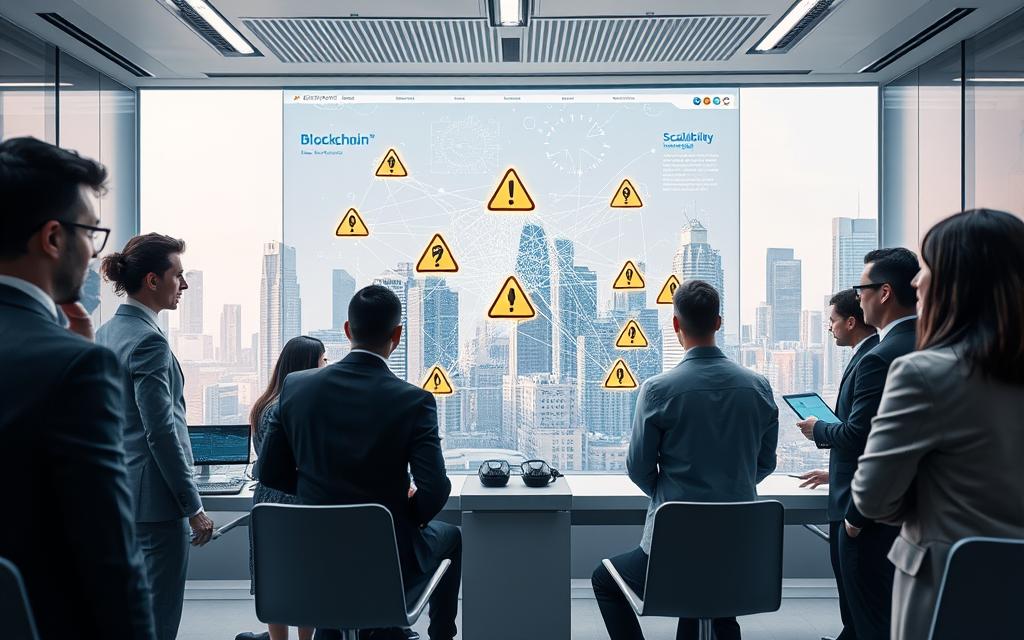
Scalability Issues
Scalability is a big problem for blockchain networks. Systems like Visa can handle thousands of transactions per second. But, blockchain networks can only manage a fraction of that.
Bitcoin, for example, can only handle about 7 transactions per second. This leads to slow processing times and high fees during busy times.
To solve these problems, new solutions are being explored:
- Layer 2 solutions like the Lightning Network
- Sharding techniques that split the network
- Alternative consensus mechanisms that can handle more
These ideas are promising but need more testing and use to prove they work well.
Regulatory and Legal Concerns
The rules for blockchain technology are unclear and different in each country. This makes it hard for global companies to operate.
Some countries welcome blockchain, while others are strict. This mix of rules makes it hard to do business across borders.
Some key legal issues include:
- Unclear tax rules for cryptocurrency
- Following data protection laws like GDPR
- Meeting anti-money laundering and know-your-customer rules
- Applying securities laws to token sales
Companies must deal with these complex laws while regulators work on clear rules.
Environmental Impact of Consensus Mechanisms
Some blockchain systems use a lot of energy, which is bad for the environment. Proof of Work systems, used by Bitcoin, need a lot of electricity.
This energy use leads to a lot of carbon emissions. The Bitcoin network uses more electricity than some countries.
New systems are being developed to be more energy-friendly:
| Consensus Mechanism | Energy Efficiency | Security Model | Adoption Examples |
|---|---|---|---|
| Proof of Work | Low | Computational effort | Bitcoin, Ethereum 1.0 |
| Proof of Stake | High | Staked currency | Ethereum 2.0, Cardano |
| Delegated Proof of Stake | High | Elected validators | EOS, TRON |
| Proof of Authority | Very High | Reputation-based | VeChain, Microsoft Azure |
Switching to more energy-efficient systems is a step in the right direction. But, it will take time for these new systems to become widely used.
Blockchain also has other challenges, like limited data storage and past links to illegal activities. These issues add to the complex landscape of challenges for companies considering blockchain.
To overcome these challenges, we need more innovation, better laws, and teamwork in the industry. The success of blockchain depends on solving these problems while keeping its security benefits.
The Future of Blockchain in Secure Transactions
Blockchain technology is growing fast, leading the way in digital change. Soon, it will team up with other new techs. This will make secure transactions better in many areas.
Blockchain is moving from just being about money to being a key for trust and safety online. It will help solve big problems in data, automation, and keeping transactions safe.
Integration with Artificial Intelligence and IoT
Artificial Intelligence and blockchain are getting stronger together. Blockchain gives AI a safe, clear place to work. This makes AI more reliable and honest.
The Internet of Things also gets a big boost from blockchain. It keeps device data safe and true. This lets machines talk to each other securely and openly.

Together, these techs let smart devices make deals on their own. This makes our digital world more efficient and safe, with less need for humans.
Potential for Mainstream Adoption
Blockchain is set to become a big deal worldwide. Experts say it will grow a lot in the next ten years. More companies will see how it helps with security and trust.
More businesses are going digital, which means they need safer ways to deal with money. People also care more about keeping their data safe. This makes blockchain very appealing.
Even areas outside of finance are looking into blockchain. It’s being used for things like keeping health records safe and making supply chains clear. This shows blockchain is becoming a must-have for businesses.
The future of safe online deals looks bright with blockchain. It’s all about keeping things the same, open, and shared. As it works with new tech, we’ll see even better ways to make online interactions safe and smooth.
Real-World Examples of Blockchain Implementation
Blockchain is changing the game in many industries, not just for digital money. Big companies are using it to solve big problems. They’re making things more open and efficient.
IBM Blockchain Platform
IBM’s blockchain platform is a top choice for businesses wanting secure digital deals. It lets companies create safe networks for different needs.
The IBM Food Trust network is a great example. It helps stores and suppliers track food from farm to table. This means they can find out about food safety issues fast, not slow.
IBM’s solutions offer:
- Clear supply chain views for many companies
- Safe data sharing among partners
- Less cost for admin tasks
- Follows rules better with unchangeable records
Big names like Walmart and Nestlé use it to improve their supply chains. It gives them verifiable provenance information that helps everyone.
Ethereum and Decentralised Applications
Ethereum has grown from just a digital currency to a key place for new ideas. Developers around the world make decentralised apps (dApps) that use smart contracts.
The Ethereum world has thousands of dApps in finance, games, and digital art. These apps work without a boss, thanks to blockchain checks.
DeFi platforms are a big part of dApps. They offer financial services without banks or middlemen. People can lend, borrow, and trade assets openly, all day, every day.
NFTs are another cool use of blockchain. They let people prove they own unique digital things. Artists and makers use it to show their work’s history and get paid automatically.
The growth of dApps shows blockchain’s wide reach beyond digital money. This lively space is pushing tech forward and opening up new chances for money worldwide.
How to Get Started with Blockchain Technology
Starting your blockchain journey needs careful planning and a solid foundation. Whether you’re a developer or a business leader, knowing the right learning resources and strategies is key. This will help you succeed in this new technology.
Educational Resources and Tools
There are many top-notch learning resources for blockchain beginners. Online platforms like Coursera and edX offer courses from top universities. These cover basic to advanced topics.
For practical experience, you need development tools. Ethereum’s Remix IDE lets you develop smart contracts in a browser. Hyperledger Fabric provides tools for enterprise blockchain networks. These tools help you start without a big investment.
Community resources are also vital for learning blockchain. GitHub has many open-source projects to study. Developer forums like Stack Exchange are great for solving problems. These places help you learn faster by working together.
Considerations for Businesses
Businesses thinking about blockchain need to consider a few key things. Choosing the right blockchain architecture is critical for success. Different types of networks are better for different needs.
| Network Type | Best For | Key Considerations |
|---|---|---|
| Public Blockchain | Transparent applications | Full decentralisation, native tokens |
| Private Blockchain | Internal processes | Controlled access, higher throughput |
| Consortium Blockchain | Industry collaboration | Shared governance, trusted participants |
| Hybrid Blockchain | Flexible requirements | Balanced transparency and privacy |
Financial planning is also important. Costs go beyond just starting. You need to budget for ongoing support and scaling. This ensures your blockchain project stays up and running.
Regulations are another big thing to think about. Different industries have different rules for blockchain. Financial services, for example, have strict rules about transactions and data.
Security is the core of a successful blockchain project. Your identity management and data protection systems must fit with your network. This keeps your data safe.
To succeed with blockchain, weigh these factors against your business goals. Starting small with pilot projects can be a good strategy. This helps you test and refine before going big.
Conclusion
Blockchain technology has changed many industries. It makes transactions and data handling secure, transparent, and efficient. This shows its value in building trust and cutting costs.
Even with challenges like scalability and regulation, blockchain’s future looks bright. It will grow with AI and IoT, opening new uses. As technology improves, we can expect more widespread use.
Blockchain’s impact is seen in finance and healthcare, among others. It’s a key player in the digital future. Adopting it can bring new, secure solutions to today’s problems.
FAQ
What is blockchain technology?
Blockchain technology is a new way to share information safely and openly. It’s like a digital ledger that keeps track of transactions. This method helps avoid problems like trust issues and single points of failure.
How does blockchain ensure security and trust?
Blockchain ensures security and trust through several key features. It’s decentralised, meaning no single authority controls it. It’s also immutable, so transactions can’t be altered. Plus, it uses consensus mechanisms to agree on transactions.
What are the key applications of blockchain beyond finance?
Blockchain is changing many areas, not just finance. It’s used in supply chains to track goods. It also helps in healthcare by securely sharing patient records. And it makes voting systems more secure and fair.
How do smart contracts work on the blockchain?
Smart contracts are programs on the blockchain that act automatically. They can handle things like payments and agreements without needing people to intervene. This makes processes more efficient and reduces the need for middlemen.
What are the environmental concerns associated with blockchain?
The main environmental worry is the energy needed for some blockchain networks. But, newer methods like Proof of Stake are more energy-friendly. This helps make blockchain more sustainable.
How can businesses get started with implementing blockchain?
Businesses should first choose the right blockchain type for them. They need to consider costs, rules, and how to keep their data safe. Planning carefully is key to a successful blockchain implementation.
What role does cryptography play in blockchain transactions?
Cryptography, like public-key cryptography, is vital for blockchain security. It ensures transactions are safe and can’t be tampered with. This keeps the network secure and trustworthy.
How is blockchain expected to evolve in the future?
Blockchain is set to get even better by combining with tech like AI and IoT. This will make data even more secure and transparent. As it improves, blockchain will become more common in many industries.
What are some real-world examples of blockchain in use today?
Today, blockchain is used in many ways. For example, IBM’s Blockchain Platform helps track food origins. Ethereum supports smart contracts for new financial and digital projects.
What challenges does blockchain technology currently face?
Blockchain faces challenges like scalability and unclear rules. It also has environmental impacts, mainly from energy use. These issues need to be addressed for blockchain to reach its full promise.


 By
By

 By
By