

Technology is about using ideas to solve real problems in a way we can repeat. It includes making things and the products that change our lives.
These innovations come as things we can touch, like machines, and things we can’t, like software. This way of solving problems is key to our progress in many areas.
The growth of these applications leads to digital transformation. It changes how we live and work. From simple daily tasks to big economic systems, it keeps pushing what we can do and how we work together.
Grasping this wide idea shows us its big impact on today’s world and what’s to come.
Defining Technology
Understanding technology means looking at both its theoretical side and how it’s used in real life. It connects abstract ideas with things we use every day.
The Etymology and Broad Meaning
The word ‘technology’ comes from the 17th century. It’s made from Greek words ‘tékhnē’ (craft or art) and ‘logia’ (study or knowledge). Together, they form ‘technología’, meaning the systematic treatment of practical arts.
This background shows technology as organised knowledge used for making things and solving problems. The Greek view highlights the know-how and know-why in human craftsmanship.
“Technology is humanity’s wisdom in turning ideas into practical solutions through systematic methods.”
Technology isn’t just about gadgets and machines. It also includes processes, methods, and the knowledge that leads to consistent results in many areas.
Technology as Tools and Systems
Today, we see technology as both physical tools and the systems that guide their use. This view shows how technology and its uses are connected but also separate.
Tools are the physical results of technology, from simple tools to advanced computers. Systems are the frameworks, protocols, and methods that make these tools work well and consistently.
The link between tools and systems shows how technology evolves. Theoretical knowledge turns into practical innovation through this interaction.
| Aspect | Tools Component | Systems Component | Modern Example |
|---|---|---|---|
| Physical Manifestation | Smartphones | Mobile networks | 5G technology |
| Knowledge Application | Surgical instruments | Medical procedures | Robotic surgery systems |
| Innovation Process | Prototype development | Research methodologies | AI development frameworks |
This wide view shows technology as a system, not just inventions. The mix of tools and systems leads to ongoing improvement and change in many fields.
Technology is our most powerful tool. It lets us turn knowledge into solutions that solve problems and open up new possibilities. This ability makes technological innovation key to our progress.
The Historical Evolution of Technology
Humanity’s journey with technology is truly remarkable. We’ve moved from basic tools to complex systems. This change has deeply impacted how we live, work, and interact with our world.
Each era has built on the last, leading to rapid progress. This progress continues to shape our society.
From Ancient Tools to the Industrial Revolution
The earliest tech innovations started in prehistory. Stone tools were the first step, allowing our ancestors to process food and build shelters.
Fire control was another big step. It brought warmth and changed food preparation. This laid the groundwork for metalwork.
The Bronze Age brought new tech that changed societies. The wheel helped with transport and trade. Roman aqueducts showed off advanced engineering for water management.
The Industrial Revolution changed everything in the 18th and 19th centuries. Steam power replaced manual labour. New production methods increased what could be made.

The Digital Age and Beyond
The 20th century brought the Digital Age, led by computing. Early calculators turned into fast electronic computers. This led to the tech we use today.
The internet was a game-changer. It connected people worldwide and changed how we share information and do business.
Each era built on the last, speeding up progress. Ancient tools led to farming changes. Industrial machines helped create digital systems.
This shows how tech grows over time. Early ideas opened doors to things we couldn’t dream of before. Today’s tech is the result of thousands of years of human creativity.
| Technological Era | Time Period | Key Innovations | Societal Impact |
|---|---|---|---|
| Prehistoric | Before 3000 BCE | Stone tools, fire control | Basic survival improvements |
| Ancient Civilisations | 3000 BCE – 500 CE | Wheel, writing systems, metallurgy | Trade expansion, record keeping |
| Industrial Revolution | 1760-1840 | Steam engine, mechanised production | Urbanisation, mass manufacturing |
| Digital Age | 1970s-Present | Computers, internet, mobile technology | Global connectivity, information access |
The history of technology shows a clear path to more advanced systems. From stone tools to digital networks, each step built on the last. This progress has shaped our modern world.
Core Components of Modern Technology
Today’s technology is built on two main parts: physical and digital. These work together to make our modern world work. It’s key to understand how they interact.
Hardware: Physical Devices and Infrastructure
Hardware is the physical side of technology. It includes everything from simple tools to big data centres. These parts are the foundation of our tech systems.
Modern hardware ranges from phones to huge projects. Telecommunications networks are key for global communication technology. Data centres with servers are also vital.
Industrial automation shows hardware’s role in making things. Robots and machines help make things faster. This setup makes industries work better.
Software: Programmes and Data Management
Software gives hardware its smarts and function. It manages data and does tasks. Without it, hardware can’t do anything.
Operating systems are basic software that controls hardware. Apps add specific features for users. Data management systems keep information in order.
Advanced software powers today’s communication technology. Apps like messaging and video calls rely on it. They make digital chats easy worldwide.
Hardware and software work together in tech. Smartphones are a great example. They mix physical parts with software for daily use.
Good communication technology needs strong hardware and smart software. Networks need both physical parts and software. This mix keeps information safe and flowing well.
Types of Technology
Technology comes in many forms across various sectors. It meets different human needs and tackles challenges. From communication and time management to manufacturing and healthcare, tech tools greatly impact our lives. This variety shows how technology adapts to different areas, creating special categories with unique purposes.
Information and Communication Technology
Information and Communication Technology (ICT) is the digital heart of our world. It includes computing systems, internet, and telecommunications networks. These enable global connections.
ICT makes sharing information fast through digital platforms and devices. It powers social media and cloud computing. The field keeps growing with better data processing and network speeds.
Businesses use ICT to work better and reach globally. Many use automation to improve communication. This technology greatly changes how we share and access information every day.
Medical and Biotechnology
Medical and biotechnology focus on health and biological innovations. It includes diagnostic tools, medical devices, and drug development tools.
Modern hospitals use advanced tech for patient care. Genetic engineering is a key area of biotechnology research. These advances help find diseases early and tailor treatments.
This field keeps finding new ways to tackle health issues. New imaging and robotic surgery tools show tech’s progress. Medical tech saves lives and improves healthcare globally.
Green and Sustainable Technology
Green and sustainable technology aims to protect the environment and save resources. It includes renewable energy, waste reduction, and ecological monitoring tools.
Solar panels, wind turbines, and energy-saving devices are key innovations. They help cut carbon emissions and promote eco-friendliness. Many companies use green tech to lessen their environmental impact.
This technology also includes water purification and recycling systems. Smart grid tech improves energy use and cuts waste. It’s vital in fighting climate change.
These tech categories sometimes blend in their uses and effects. They show technology’s wide range across society. Each type meets specific needs and helps human progress.
Technology’s Impact on Society
Technology has changed how we live and interact. It has changed how we connect with each other and learn new things. This section looks at these changes in communication and education.
Transforming Communication and Social Interactions
Digital tools have changed how we stay in touch with others. We can now talk and share things instantly, no matter where we are. This has made it easier to stay connected.
Studies show that these tools have changed how we act socially. A study found that “We’re more connected than ever before. This means we can easily reach out to family, friends, and more.” But, this constant connection can also be challenging for our well-being.

Social media has also changed how we connect. It lets us join groups based on what we like, not where we live. These online communities help us share information and work together worldwide.
But, these changes also bring new challenges. Some worry that online friendships are not as good as real-life ones. The use of artificial intelligence in these tools makes things even more complex.
Changes in Education and Learning Methods
Schools now use technology to improve learning. They use digital classrooms and online tools to teach. These tools help students learn at their own pace and get feedback right away.
This change in education makes learning more flexible. As one report says:
“Technology lets students learn from home. They can watch lectures, join discussions, and do assignments from anywhere.”
This change helps many students, including those who can’t go to school in person. It makes learning easier for everyone, no matter where they are.
Technology in education also includes artificial intelligence tutors. These tutors adjust to how each student learns. They use data to find out what each student needs to learn more.
The table below shows how education has changed with technology:
| Aspect | Traditional Education | Technology-Enhanced Education |
|---|---|---|
| Accessibility | Location-dependent | Global access |
| Pacing | Fixed schedule | Self-paced learning |
| Resources | Physical textbooks | Digital multimedia |
| Assessment | Periodic testing | Continuous feedback |
| Personalisation | Standardised approach | Adaptive learning paths |
But, there are challenges with technology in schools. Some students don’t have access to these tools. Teachers also need to learn how to use them well.
Technology keeps getting better. Artificial intelligence and virtual reality are making learning even more real. These changes will keep changing how we learn and share knowledge.
Economic Implications of Technology
Technology is changing the world’s economy in big ways. It’s changing jobs and trade patterns. This brings both good and bad changes to our societies.
Automation and the Labour Market
Automation is changing work in many fields. Some worry it will take jobs away. But, the truth is more complex.
Studies show that automation doesn’t lead to more unemployment. Instead, it changes jobs. Workers move to tasks that need human skills.
New industries and jobs are created by technology. For example, e-commerce has brought new jobs in logistics and digital marketing.
Now, artificial intelligence and robotics are doing the same. They automate some tasks but create new ones like AI supervision and data analysis.
“Technological change is the largest cause of long-term economic growth”
Skills needed for jobs have changed with technology. Now, we need digital skills, problem-solving, and adaptability. Schools and companies are focusing on these skills.
| Technology Type | Job Impact | Skill Requirements | Industry Examples |
|---|---|---|---|
| Manufacturing Robotics | Manual roles decrease, technical roles increase | Machine operation, maintenance skills | Automotive, electronics |
| AI Systems | Data processing roles transform | Data analysis, interpretation skills | Finance, healthcare |
| E-commerce Platforms | Retail positions shift to logistics | Digital marketing, supply chain management | Retail, distribution |
| Renewable Energy Tech | New green jobs created | Engineering, installation expertise | Energy sector, construction |
Globalisation and Digital Economies
Technology has made the world’s economy more global. Digital platforms and networks have made it easier for businesses to reach international markets.
E-commerce lets small businesses sell to customers worldwide. Digital payments and supply chain tech make international trade smoother.
This global connection brings big benefits. Companies can grow, and consumers get more choices. But, it also creates challenges like digital divides.
New sustainable technology can help solve these problems. It supports fairer economic growth.
Global networks have changed how businesses work. Teams work together from anywhere, and markets never close. This boosts the economy but also puts pressure on workers and businesses.
As we move to digital economies, we need smart policies. We must balance innovation with protecting workers and regulating markets. Sustainable technology can help make our economies stronger.
As digital economies grow, we must think about data, taxes, and rules for international trade. These issues will shape the future of technology and the economy.
Ethical Considerations in Technology
Technology is now a big part of our lives, raising important ethical questions. These questions go beyond just how technology works. They touch on how it affects our values, rights, and society.

Privacy and Data Security Concerns
The digital world has given us new ways to collect and use data. Every time we go online, we create data that companies can use. This data can make our lives better, but it also risks our privacy.
Data breaches are happening more often, revealing personal info to hackers. The economic impact of these breaches can be huge for both people and businesses. Many feel they’re losing privacy for the sake of convenience, without knowing the full cost.
Surveillance tech, like facial recognition and tracking, also raises big questions. These tools can threaten our freedom if not used carefully. Finding a balance between safety and privacy is a big challenge for today’s world.
Artificial Intelligence and Moral Dilemmas
AI brings up tough moral issues that we’re just starting to think about. These systems can carry and even grow biases if trained on bad data. This can lead to unfair decisions in areas like jobs and justice.
AI that makes choices on its own raises questions about who’s to blame for mistakes. The idea of AI deciding life or death is very worrying. It makes us question who should be in charge.
AI could also take jobs, which is a big worry for the economy. While AI can make things more efficient, it might also make some jobs disappear. We need to plan for how people will adapt to these changes.
These issues highlight the need for ongoing talks about technology’s role in society. We must create rules and ensure innovation is done responsibly. This way, technology can help us without causing harm.
Technology and Environmental Sustainability
Technology is a double-edged sword in the fight against environmental damage. It can harm our planet but also help protect it. We must think carefully about how we use and develop technology.
For decades, we’ve been working on cleaner tech to reduce environmental harm. This effort has led to a mix of progress and new challenges.
Renewable Energy Innovations
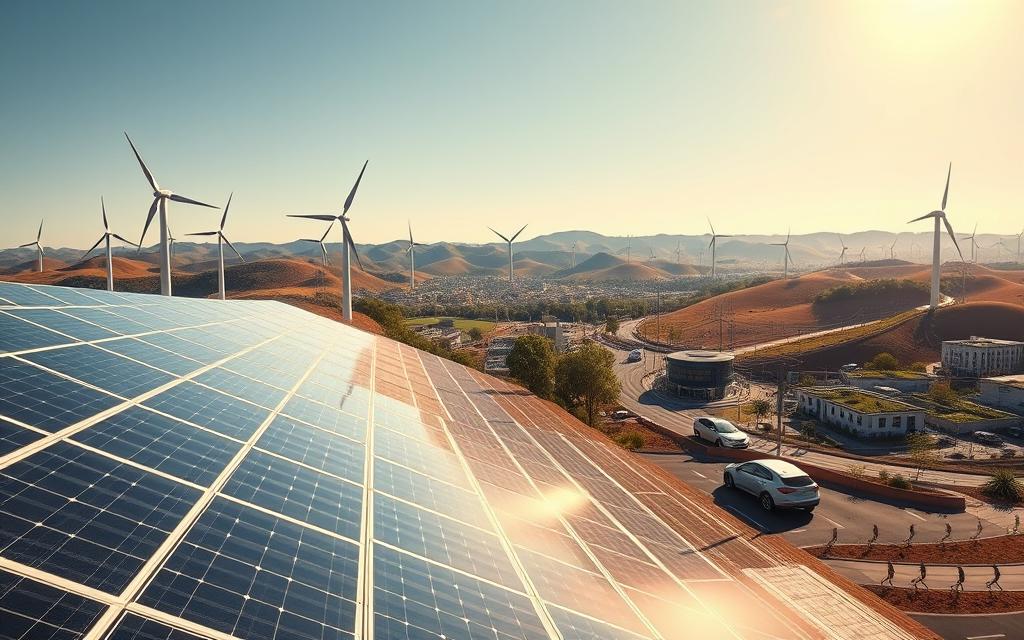
Renewable energy is a key area where tech can help the environment. Solar panels are getting better at turning sunlight into electricity.
Wind turbines are also getting bigger and more efficient. This makes clean energy a strong competitor to fossil fuels.
Hydroelectric power is evolving, with smaller systems that harm nature less. New tech like tidal and wave energy is tapping into the ocean’s power.
Improvements in energy storage are also vital. Better batteries help store renewable energy, making it more reliable. This reduces our need for dirty energy.
E-Waste and Ecological Footprints
Technology’s impact isn’t just in energy production. It also affects how we manage electronic waste. Millions of tonnes of e-waste are generated every year.
Creating tech devices uses a lot of resources. This includes rare earth minerals, water, and energy. Transporting goods also adds to emissions.
When we throw away devices, it’s a problem. They can harm soil and water with toxic materials. We need special recycling for e-waste.
The digital world also has an environmental cost. Data centres use a lot of energy. So do network equipment and devices we use.
To tackle these issues, we need ethical technology. Makers should think about the whole lifecycle of their products. Users can help by being mindful of their tech use and disposal.
Circular economy ideas are good for tech sustainability. They include designing products for repair, recycling, and using recycled materials.
Knowing how tech affects the environment is key. We must balance innovation with responsibility. Sustainable tech development means understanding both sides and finding ways to reduce harm.
Future Trends in Technology
Technology is changing fast, showing us what’s next. We see today’s ideas becoming tomorrow’s basics. Looking ahead, new areas are set to change what we think is possible.
Emerging Fields: Quantum Computing and Biotechnology
Quantum computing is a big deal in future technology. It uses qubits, not bits, for super-fast calculations. This could change things like cryptography and drug discovery.
Biotechnology is also making big strides. Genetic engineering and personalised medicine are changing healthcare. Now, scientists can edit genes to find cures for diseases. Personalised medicine makes treatments work better for each person.
These emerging technologies show how innovation is changing things. They’re not just small updates but big changes in how we solve problems.
The Role of Technology in Shaping Tomorrow
Technology is leading the way in changing society. As one expert says:
“The exploration of technological impact reveals how innovations shape narratives, alter social dynamics, and redefine human experiences.”
This impact is seen in many areas:
- Healthcare systems becoming more predictive and preventive
- Energy production shifting toward sustainable models
- Transportation evolving toward autonomous systems
- Communication platforms creating new social paradigms
But, there are big challenges too. We must think about ethics, security, and how society adapts. Developing future technology needs careful planning to make sure the benefits are worth the risks.
Technology’s role in human progress is clear. The choices we make today will shape the future. So, it’s important to innovate responsibly for the next generations.
Conclusion
Technology is our way of solving problems and making life better. It has changed our world in amazing ways. We’ve seen big changes in every part of society.
Technology’s impact is not set in stone. It can be good or bad, depending on how we use it. This means we all have a big role to play.
Technology can help us or cause problems. We need to think about things like privacy and the environment. Finding the right balance is key.
The future of technology depends on our choices. We must focus on creating positive change. This means thinking about ethics and what’s best for society.
We should use technology wisely, not just follow it blindly. Working together, we can make the most of it. This way, technology can help everyone, not just a few.
FAQ
What is the origin of the word ‘technology’?
The word ‘technology’ comes from Greek. “Tékhnē” means craft or art, and “logia” means study or knowledge. It’s about using knowledge to make practical tools and systems.
How has technology evolved throughout history?
Technology started with stone tools and fire control in ancient times. Then, the wheel and Roman aqueducts were big steps. The Industrial Revolution brought steam power, and now we have computing, the internet, and AI.
What are the core components of modern technology?
Modern tech has two main parts. Hardware includes devices and machinery. Software includes programmes and data systems that make things work.
What are the main types of technology in use today?
Today, we have ICT for communication, medical and biotechnology for health, and green tech for the environment. Each type meets different human needs.
How does technology impact society and communication?
Tech has changed how we talk to each other. It lets us connect worldwide instantly. It also changes how we interact and share information.
What role does technology play in education?
Tech has brought digital classrooms and online learning. It makes learning more accessible. But, it also creates challenges like the digital divide.
How does technology affect the economy and employment?
Tech drives automation, creating new jobs but also replacing old ones. It helps global trade through e-commerce. But, it also raises questions about fairness in the economy.
What are the ethical concerns associated with technology?
Big ethical issues include privacy and data security. There’s also the problem of AI bias and job loss. These are big challenges.
How does technology relate to environmental sustainability?
Tech helps with green energy like solar and wind. But, it also causes problems like e-waste. We need to balance these effects.
What are some emerging trends in technology?
New areas include quantum computing and advanced biotechnology. These are set to change healthcare, energy, and communication.
Why is responsible innovation important in technology development?
Responsible innovation means tech is developed and used wisely. It considers social impacts and sustainability. This way, we get the most benefits with fewer drawbacks.
How does technology contribute to globalisation?
Tech supports global trade and communication. It helps businesses and people work worldwide. This makes the world more connected.
What is meant by green and sustainable technology?
Green tech is about reducing harm to the environment. It includes clean energy and eco-friendly processes. It helps protect our planet.
Can technology both solve and create environmental problems?
Yes, tech offers solutions like clean energy. But, it also causes problems like e-waste. We need to find a balance.


 By
By

 By
By