
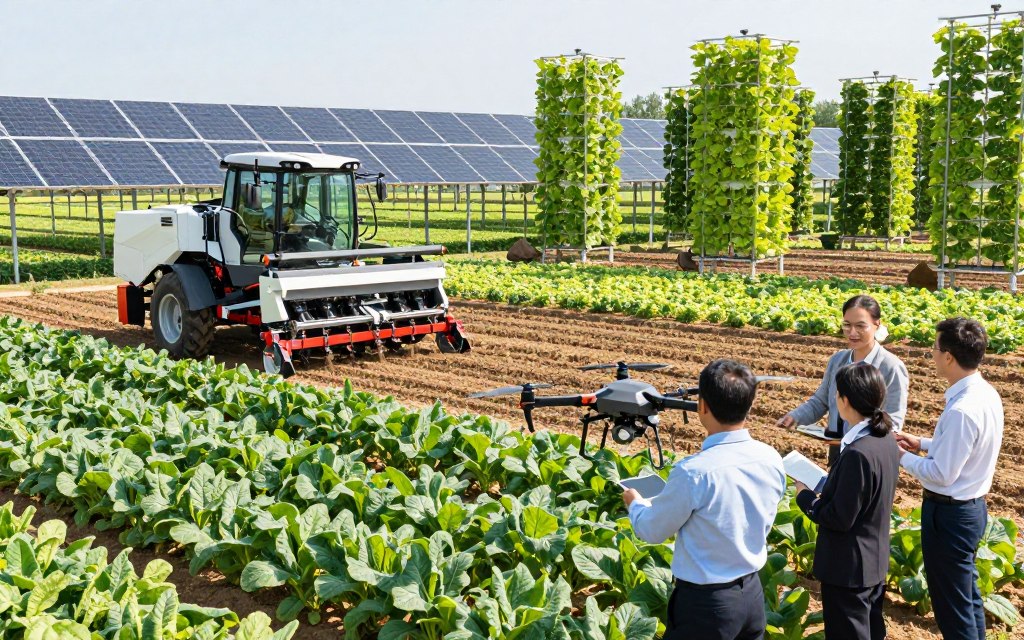

As farming changes, agricultural technology leads this transformation through digital tools, automation, and biotechnology. In the United States, farmers face labor shortages, water scarcity, and climate variability. These innovations address these challenges while improving efficiency and sustainability.
What are the new technologies in agriculture? This article presents ten major farming innovations shaping the future of farming. Precision agriculture, drones, artificial intelligence, and the Internet of Things offer unique ways to improve productivity and sustainability.
Other advances include agricultural robotics, vertical farming, CRISPR, blockchain, advanced irrigation, and biopesticides. However, no innovation suits every farm. Farm size, crop type, and budget influence which tools farmers adopt.
This overview is a practical guide for farmers, agribusiness professionals, and anyone interested in sustainable food production. It explains how these tools support better farming decisions. By understanding agtech, stakeholders can make informed decisions about the future of their agricultural practices.
Key Takeaways
- Agtech is revolutionizing farming practices in the U.S.
- Innovations address critical challenges like labor shortages and climate change.
- Precision agriculture and drones enhance crop management.
- Adoption of technologies depends on farm-specific factors.
- These advancements aim for sustainable food production.
What Are the New Technologies in Agriculture and Why Do They Matter?
New technologies are changing how farms work. They improve efficiency, production, and sustainability. With modern agriculture technology, farmers can track conditions, make informed choices, and manage resources well.
Traditional machines mainly replace physical labor. In contrast, digital agriculture uses advanced systems to gather real-time data. Farmers can study field conditions, automate routine tasks, and adjust work precisely, improving yields while reducing waste.
These technologies are vital to U.S. agriculture. Farmers face pressure to increase production while limiting environmental harm, making sustainable farming technology essential. These tools can reduce fertilizer runoff, lower pesticide exposure, and conserve water while maintaining high production standards.
These tools serve more than large industrial farms; smaller producers can also use smart farming solutions. Cloud platforms, mobile apps, and affordable sensors give more farmers access to advanced tools. Equipment-as-a-service models improve access, allowing even small operations to use these innovations.
New agricultural technologies also require practical planning. Farmers must address data ownership, cybersecurity, interoperability, maintenance, workforce training, and return on investment when installing systems. Compliance with environmental and food-safety regulations can also affect adoption.
Understanding the landscape of agricultural innovation helps farmers judge each technology’s potential benefits. Using these advances can support a more efficient, sustainable future for agriculture.
1. Precision Agriculture and GPS-Guided Equipment
Precision agriculture uses modern tools to help farms produce more while working efficiently. GPS-guided equipment helps farmers manage fields with greater accuracy.
How Precision Agriculture Works
Precision agriculture combines several tools for detailed field management. Farmers use GPS to mark field boundaries and create accurate land maps.
Producers gather soil and crop data with yield monitors and soil samples to create management zones. With variable-rate technology, farmers adjust seed, fertilizer, and irrigation for each zone. This approach supports healthy crops and uses resources wisely.
Key Benefits for Modern Farmers
Precision agriculture offers major benefits. With these tools, farmers can:
- Improve input efficiency: Optimize the use of seeds, fertilizers, and water.
- Enhance planting accuracy: Reduce overlap and waste during planting.
- Lower fuel consumption: Minimize unnecessary trips across fields.
- Maintain better records: Streamline data collection for future analysis.
- Boost yield analysis: Make informed decisions based on precise data.
Precision agriculture works best with accurate data, calibrated equipment, reliable connections, and agronomic expertise. Farmers must connect their systems and understand the data.
Leading Precision Agriculture Brands
Recognized names include John Deere precision technology and Trimble Agriculture. Their products include precision tools, GPS solutions, and farm management software.
| Brand | Type | Key Products |
|---|---|---|
| John Deere | Equipment Manufacturer | Precision technology, tractors, and sprayers |
| Trimble Agriculture | Guidance Provider | GPS solutions and farm management software |
| AGCO | Equipment Manufacturer | Tractors and harvesting equipment |
| CNH | Equipment Manufacturer | Farm machinery and precision tools |
| Climate FieldView | Software Platform | Data analytics and management software |
These tools offer major benefits, but farmers should consider costs, system compatibility, and subscription fees. Technology should work smoothly with current machinery to improve the return on investment.
For more information about precision agriculture’s growth, visit this resource.
2. Agricultural Drones and Aerial Imaging
Aerial crop imaging with drones is changing modern agriculture. Agricultural drones give farmers a fast view of fields and support monitoring that may cost more from the ground. Farm drone technology helps farmers optimize crop management and support sustainable farming.
Types of Agricultural Drones
Agricultural drones serve several tasks, with each type built for a specific job. Knowing these types helps farmers choose technology for their needs.
- Multirotor Drones: Known for their maneuverability, these drones are ideal for small fields and detailed inspections. However, they have a limited flight time and coverage area.
- Fixed-Wing Drones: These drones cover larger areas efficiently and have longer flight times. They are best for mapping and surveying but require more space for takeoff and landing.
- Hybrid VTOL Drones: Combining the advantages of both multirotor and fixed-wing designs, these drones can take off and land vertically while also covering vast areas.
- Spraying Drones: Equipped to apply pesticides or fertilizers, these drones enhance precision in crop management but must comply with strict regulations regarding chemical use.
Crop Monitoring Applications
Drone crop monitoring supports many farm tasks, including:
- Stand counts and emergence checks
- Disease and pest scouting
- Irrigation assessment
- Storm damage documentation
- Plant-health analysis
- Weed mapping
- Targeted spraying
RGB, multispectral, and thermal sensors help drones reveal crop stress hidden from the naked eye. This multispectral imaging needs careful interpretation, and field scouting should confirm its findings.
Top Drone Manufacturers
Several companies lead the agricultural drone market with solutions designed for farmers. Notable manufacturers include:
- DJI Agriculture: Renowned for its advanced drone technology and user-friendly interfaces.
- Parrot: Offers versatile drones suitable for various agricultural applications.
- AgEagle: Specializes in drone solutions for precision agriculture.
- Wingtra: Known for fixed-wing drones that cover large areas efficiently.
- XAG: Focuses on agricultural spraying drones with advanced features.
When choosing a drone, farmers must consider Federal Aviation Administration (FAA) regulations, pilot certification, and privacy issues. They must also review weather, battery management, data processing, and safe operation around people and property.
3. Artificial Intelligence and Machine Learning
Artificial intelligence in agriculture supports machine learning farming by giving farmers tools for better decisions and higher productivity. These tools study large data sets to find patterns, improve yields, and manage resources efficiently.
AI Applications in Farming
AI applications in farming include tools for AI crop monitoring and other useful tasks:
- Computer Vision for Weed and Disease Detection: AI systems can analyze images from fields to identify weeds and diseases early, allowing for timely interventions.
- Automated Crop Counting: Machine learning algorithms can accurately count crops, helping farmers estimate yields and plan harvests.
- Livestock Monitoring: AI tools can track the health and behavior of livestock, ensuring they receive the care they need.
- Harvest Estimation: Predictive models can forecast harvest times based on weather and crop conditions.
- Robotic Navigation: Autonomous vehicles equipped with AI can navigate fields efficiently, reducing labor costs.
- Quality Inspection: AI can assess the quality of produce, ensuring only the best products reach consumers.
Predictive Analytics and Decision Support
Predictive analytics agriculture tools help farmers plan. They combine data from several sources:
- Weather forecasts
- Historical yield data
- Soil conditions
- Imagery from drones
- Equipment performance
- Market signals
Using these sources, farmers can plan planting, irrigation, spraying, and harvest timing. AI outputs are recommendations, not guarantees. Poor, incomplete, or biased data can produce unreliable results, so people must oversee decisions.
Leading AI Platforms
Several platforms lead AI integration in agriculture. These platforms support many uses, including computer vision farming. Notable examples include:
- Microsoft Azure for Agriculture: Offers tools for data analysis and predictive modeling.
- IBM Environmental Intelligence: Provides insights into environmental factors affecting agriculture.
- Climate FieldView: A platform for real-time data collection and analysis.
- CropX: Focuses on soil data and irrigation management.
- Prospera: Specializes in computer vision and crop monitoring.
These platforms face data privacy, system integration, and rural connectivity challenges. Solving these issues is vital for successful AI adoption in agriculture.
AI and machine learning should support farmers, not replace them. These tools strengthen agricultural decision support, helping farmers navigate modern agriculture and improve productivity and sustainability.
4. Internet of Things and Smart Sensors
Internet of Things agriculture is revolutionizing farming by connecting devices and sensors. It helps farmers gather real-time data from fields, improve decisions, and work more efficiently. Farmers can monitor conditions remotely, respond quickly, and improve their practices.
How IoT Transforms Farming Operations
IoT technology integrates field sensors, weather stations, irrigation controllers, and livestock monitoring technology into one system. Connected farm equipment and other devices automatically collect and send data, helping farmers track soil conditions and livestock health.
For instance, soil moisture sensors, a type of smart farming sensors, help farmers choose the best irrigation time. This approach cuts water waste and can increase crop yield. Farmers can also view real-time farm data on mobile devices and stay informed about operations.
Key Sensor Technologies
Several sensor technologies play vital roles in IoT agriculture:
- Soil moisture sensors: Measure the moisture content in the soil to optimize irrigation.
- Temperature and humidity sensors: Monitor environmental conditions that affect crop growth.
- Leaf-wetness sensors: Help predict disease risks by detecting moisture on plant leaves.
- Weather stations: Provide localized weather data for better planning.
- Livestock activity trackers: Monitor the health and behavior of farm animals.
These and other technologies create a more connected and efficient farming ecosystem.
Benefits of Real-Time Monitoring
Real-time monitoring gives farmers several advantages. Continuous data collection supports timely irrigation, early disease-risk warnings, and equipment maintenance alerts. This approach can produce healthier crops and livestock while improving farm productivity.
However, IoT technology has limitations. Proper sensor installation, calibration, and maintenance are vital for accurate data. Farmers must also consider connectivity options, including cellular, Wi-Fi, and satellite connections, especially where rural coverage is limited.
Data security and interoperability also matter. Farmers need useful information without getting locked into disconnected technology ecosystems. By using IoT and smart farming sensors, producers can improve operations and support sustainable farming.
For more insights into the latest technology trends, visit today’s top technology news updates.
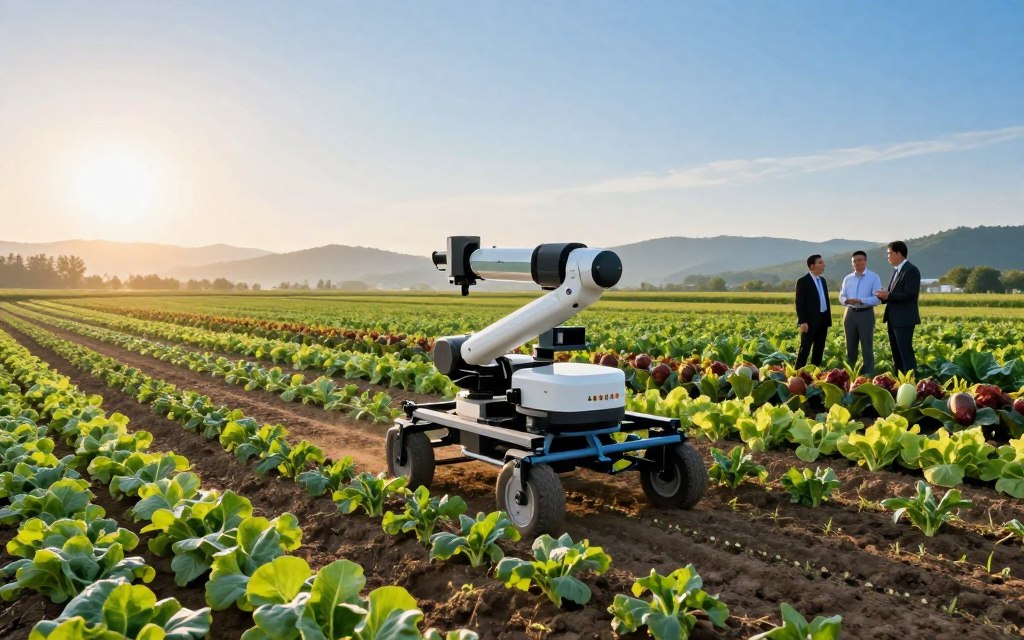
5. Autonomous Vehicles and Agricultural Robotics
In recent years, agricultural robotics has changed farming through autonomous farm equipment. These tools improve efficiency, productivity, and farm automation. Farmers can focus on planning while this section examines robot types, ag robotics companies, and labor effects.
Types of Agricultural Robots
Agricultural robots handle many farm tasks. Common types include:
- Autonomous tractors: These vehicles can navigate fields without human intervention, optimizing planting and harvesting.
- Robotic weeders: These machines identify and remove weeds, reducing the need for chemical herbicides.
- Harvest robots: Equipped with advanced sensors, these robots can pick fruits and vegetables with precision.
- Milking systems: Automated milking machines streamline dairy operations, improving efficiency and animal welfare.
- Greenhouse robots: These robots manage climate control and assist in planting and harvesting within controlled environments.
- Automated material-handling equipment: This equipment transports supplies and produce, enhancing logistics on the farm.
There are three main categories of agricultural robots:
- Fully autonomous equipment: Operates independently, making decisions based on real-time data.
- Remotely supervised machines: Require human oversight but can perform tasks autonomously.
- Conventional equipment with automated guidance: Enhances traditional machines with technology for specific tasks.
Leading Companies in Ag Robotics
Several ag robotics companies lead innovation in agricultural robotics. Their work includes robotic harvesting and other farm tools. Notable companies include:
- John Deere: Known for its advanced agricultural machinery, it integrates robotics into its equipment.
- CNH Industrial: Offers a range of autonomous tractors and precision farming technologies.
- AGCO: Focuses on farm automation solutions, including robotics for harvesting and planting.
- Monarch Tractor: Develops electric, autonomous tractors designed for sustainability.
- Blue River Technology: Specializes in precision agriculture using robotics for weed control.
- Carbon Robotics: Innovates in robotic weeding technology, promoting sustainable farming practices.
- Naïo Technologies: Provides robots for weeding and crop maintenance in various environments.
- FFRobotics: Focuses on harvesting solutions for fruits and vegetables.
- Verdant Robotics: Develops robotic systems for crop management and harvesting.
These companies lead the field, but technology access and commercial readiness vary by region and use.
Impact on Labor and Efficiency
Agricultural robotics strongly affects farm labor and efficiency. These technologies can:
- Reduce exposure to repetitive or hazardous tasks, improving worker safety.
- Address seasonal labor constraints, ensuring timely operations.
- Enhance operating consistency, leading to higher crop yields.
- Enable more precise input use, reducing waste and environmental impact.
However, robotic systems bring challenges. High upfront costs, maintenance, and workforce retraining require careful planning. Farms need safety protocols for varied environments, and many systems support rather than replace human labor.
Successful deployment requires clear procedures, reliable connectivity, and service support during critical planting and harvest windows. As technology evolves, agriculture can gain greatly from these advances.
6. Vertical Farming and Controlled Environment Agriculture
Vertical farming is changing how cities grow food. This approach grows crops in stacked layers or on vertical surfaces. Controlled environment agriculture (CEA) manages lighting, temperature, humidity, and nutrients.
The method works well for leafy greens, herbs, and microgreens. Large field crops remain hard to grow economically indoors.
How Vertical Farming Works
Vertical farming uses several systems to improve plant growth. These systems include:
- Hydroponic Farming: This soil-less method uses nutrient-rich water to nourish plants.
- Aeroponic Agriculture: In this system, plants are suspended in air and misted with nutrients, maximizing oxygen exposure.
- Substrate-Based Systems: These systems use a growing medium to support plant roots while providing nutrients.
Indoor farming technology uses LED lights to support plant growth. These lights provide tailored spectra that can improve growth. Climate software and automated racks maintain ideal conditions for efficient crop production.
Major Vertical Farming Companies
Several vertical farm companies lead this field with different business models and crops. Their specialties include leafy greens, microgreens, and herbs.
| Company | Location | Specialty Crops | Business Model |
|---|---|---|---|
| Plenty | California | Leafy Greens | Retail Partnerships |
| AeroFarms | New Jersey | Microgreens | Wholesale Distribution |
| Bowery Farming | New York | Herbs | Direct-to-Consumer |
Sustainability and Resource Benefits
Vertical farming offers many sustainability benefits, including less land use and shorter supply chains. It protects crops from severe weather and may use less water than traditional farming. Year-round production provides a steady supply of fresh produce.
However, these systems need much electricity and costly construction. They also require careful nutrient management. Packaging and local power grid emissions affect the total sustainability of vertical farms.
Understanding these benefits helps farmers choose between vertical farming and traditional open-field agriculture. The right choice depends on where controlled environments offer strategic advantages.
7. Genetic Engineering and CRISPR Technology
CRISPR agriculture and genetic engineering crops are changing farming. These tools modify crop and livestock genes to create useful traits. They can improve disease resistance, raise nutrition, and help crops survive harsh conditions.
CRISPR, or Clustered Regularly Interspaced Short Palindromic Repeats, is a powerful tool for gene editing in farming. Unlike older genetic engineering methods, CRISPR makes precise changes within one species. Scientists can improve traits without adding foreign DNA.
Applications of CRISPR in Agriculture
CRISPR technology has many uses in agriculture. It supports disease-resistant crops, drought-tolerant crops, and other advances.
- Disease-resistant crops: CRISPR can be used to develop plants that are resistant to various diseases, reducing the need for chemical pesticides.
- Drought-tolerant crops: By editing genes related to water retention, farmers can cultivate crops that withstand dry conditions.
- Improved nutritional profiles: Gene editing can enhance the nutritional content of crops, making them healthier for consumers.
- Reduced browning: CRISPR can modify the genes responsible for browning in fruits and vegetables, extending their shelf life.
- Altered plant architecture: This technology can help create plants that are better suited for specific environments, optimizing growth.
- Enhanced shelf life: By modifying certain traits, CRISPR can help keep produce fresh for longer periods.
- Livestock health research: CRISPR is also being used to improve the health and productivity of livestock.
Benefits and Industry Controversies
CRISPR and genetic engineering offer major benefits in agriculture. They can reduce crop losses, improve climate resilience, and raise food quality. These agricultural biotechnology tools can also reduce agricultural inputs, including fertilizers and pesticides, supporting sustainable farming.
However, CRISPR use in agriculture remains controversial. Off-target effects may cause unintended genetic changes. People also debate biodiversity, ownership of genetic traits, and consumer acceptance.
These issues strongly shape public perception of the technologies. Labeling and market access for genetically modified organisms (GMOs) remain hotly debated. Concentrated biotechnology patents also raise questions about future agricultural innovation.
Leading Research Institutions and Companies
Many institutions and companies lead CRISPR research and agricultural biotechnology. Notable organizations include:
- USDA Agricultural Research Service: Focuses on advancing agricultural practices through research.
- Cornell University: Conducts significant research in agricultural biotechnology.
- University of California system: Engages in various projects related to gene editing in crops.
- Innovative Genomics Institute: Works on CRISPR applications for sustainable agriculture.
- Bayer: A leader in agricultural biotechnology, developing innovative solutions.
- Corteva Agriscience: Focuses on improving crop genetics and farming practices.
- Pairwise: Specializes in gene editing to enhance food production.
- Benson Hill: Utilizes gene editing to improve crop traits and yield.
Regulatory treatment of genetically engineered products varies by jurisdiction. Clear communication and evidence-based evaluations can build public trust in these technologies.
8. Blockchain for Agricultural Supply Chains
Blockchain agriculture technology is changing the agricultural supply chain by building trust and improving transparency. This shared digital ledger records and checks transactions among many participants, so each supply chain step stays documented and traceable. It connects production, handling, processing, shipping, and sales data to time-stamped records, making hidden changes easier to detect.
However, blockchain does not guarantee accurate information by itself. Farmers, processors, inspectors, logistics providers, and retailers must enter reliable data. Accurate input is vital to effective blockchain food systems.
How Blockchain Ensures Transparency
Blockchain provides a framework for agricultural supply chain traceability that improves farm-to-table transparency. Each transaction is securely recorded, giving stakeholders a complete product history. This transparency helps build consumer trust and support food safety.
Key Use Cases in Agriculture
Several key uses show blockchain’s potential in agriculture:
- Food traceability: Quickly trace products back to their source to enhance safety.
- Recall management: Limit the scope of recalls by identifying affected products efficiently.
- Certification verification: Ensure that products meet regulatory standards.
- Origin claims: Verify the authenticity of product origins.
- Sustainability documentation: Track sustainable practices throughout the supply chain.
- Payments and inventory management: Streamline transactions and manage stock levels.
- Smart contracts: Automate agreements and transactions in the supply chain.
Faster tracing can improve consumer confidence when records are complete and reliable. Using food traceability technology, agriculture can respond faster to food safety issues. Smart contracts farming can automate agreements and transactions across the supply chain.
Companies Implementing Blockchain Solutions
Several companies lead the way in implementing blockchain solutions in agriculture:
- IBM Food Trust: A blockchain platform that enhances transparency in the food supply chain.
- Walmart: Actively uses blockchain for traceability initiatives to ensure food safety.
- TE-FOOD: A comprehensive solution for farm-to-table tracking.
- Provenance: Focuses on transparency and sustainability in food systems.
These initiatives show promise, but major challenges remain. Challenges include platform interoperability, small-producer participation, privacy, transaction costs, and integration with existing systems. These issues must be solved before widespread adoption can occur.
9. Advanced Irrigation and Water Management Systems
In today’s agricultural landscape, advanced irrigation and water management systems improve efficiency and sustainability. These systems use modern technology to give crops the right water during each growth stage. Smart irrigation matches water use to crop needs and local conditions, supporting healthier yields.
Smart Irrigation Technologies
Smart irrigation technologies include these agricultural water management solutions:
- Drip irrigation technology: This method delivers water directly to the plant’s roots, minimizing evaporation and runoff.
- Microirrigation: Similar to drip systems, microirrigation uses low-pressure water delivery systems to target specific areas.
- Variable-rate irrigation: This technology adjusts water application rates based on field variability, ensuring optimal water distribution.
- Soil moisture probes: These sensors monitor soil moisture levels, allowing for timely irrigation adjustments.
- Evapotranspiration-based scheduling: This approach calculates water needs based on weather data and plant requirements.
- Automated valves and pressure monitoring: These systems help maintain consistent water pressure and flow rates.
- Remote-control platforms: Farmers can manage irrigation systems from anywhere, enhancing convenience and responsiveness.
- Leak detection: Early identification of leaks helps prevent water waste and ensures system efficiency.
These tools adjust irrigation for soil type, crop growth stage, field shape, and weather forecasts. This precision irrigation approach reduces water waste and helps crops withstand stress.
Water Conservation Benefits
Advanced systems offer several water conservation benefits, especially through irrigation automation:
- Lower evaporation rates: Efficient watering techniques reduce the amount of water lost to evaporation.
- Reduced runoff: By delivering water directly to the roots, these systems minimize runoff into nearby waterways.
- Improved root-zone management: Targeted watering promotes healthier root systems, leading to stronger plants.
- Energy savings: Automated systems often require less energy to operate, lowering costs for farmers.
- Reduced nutrient leaching: By applying water more efficiently, nutrients remain in the soil where they are needed.
- Better resilience during drought: These systems help farmers adapt to water scarcity and comply with drought restrictions.
Technology alone cannot fix poor system design or weak maintenance. Clogged emitters, poor filtration, and incorrect sensor placement can reduce these benefits. Overwatering from inaccurate settings can also waste water.
Leading Irrigation Solution Providers
Several companies lead the market for advanced irrigation solutions:
- Netafim: A pioneer in drip irrigation technology.
- Rivulis: Specializes in microirrigation and water management solutions.
- Lindsay Corporation: Known for its pivot irrigation systems.
- Valley Irrigation: Offers comprehensive irrigation solutions, including automation.
- Jain Irrigation: Provides a wide range of irrigation products and services.
- Toro: Known for its residential and commercial irrigation systems.
- CropX: Focuses on soil moisture monitoring and analytics.
In the United States, groundwater rules, regional water rights, and conservation incentives shape agricultural water management. Farmers must measure water applied and crop response for effective irrigation.
10. Biopesticides and Biological Crop Protection
Biopesticides use natural materials for natural pest control and support biological crop protection. They come from microorganisms, plant extracts, and certain biochemical compounds. The main groups include microbial pesticides, biochemical pesticides, and plant-incorporated protectants; definitions may vary under regulations.
What Are Biopesticides
Biopesticides offer a sustainable alternative to traditional chemical pesticides, using natural substances that help farmers reduce chemical inputs. Microbial pesticides use living organisms or their byproducts to control pests. Biochemical pesticides contain no living organisms, while plant-incorporated protectants help modified plants produce pest-fighting substances.
Advantages Over Chemical Pesticides
Biopesticides can target pests while reducing harm to non-target organisms, including beneficial insects. They can also join existing integrated pest management (IPM) programs and improve results.
Biopesticides may require shorter residue intervals, so farmers can harvest crops sooner after application. They also help manage pest resistance through rotation and combination strategies, supporting sustainable pest management.
Biopesticides still carry risks, so timing, storage, and application must be proper. Farmers must follow product labels and protect workers during application.
Leading Biopesticide Companies
Several companies lead biopesticide development, including BioWorks, Certis Belchim, and Valent BioSciences. Other significant players include Koppert, Bioceres Crop Solutions, and Bayer’s biologicals division. Together, these firms develop effective solutions for sustainable agriculture and highlight biological products’ role in modern farming.
Biological products work best within broader programs using scouting, crop rotation, resistant varieties, sanitation, and habitat management. The U.S. Environmental Protection Agency registers these products and checks compliance with safety standards.
Conclusion
The future of agriculture is bright. Innovative tools are changing farming and driving agricultural technology trends, including precision agriculture, drones, and artificial intelligence.
These tools offer sustainable agriculture solutions that improve efficiency and resilience as the climate changes.
Farm innovation addresses specific agricultural challenges, not every problem at once. Smart sensors monitor soil health, while blockchain improves supply-chain transparency. Farmers should assess technology adoption in farming for reliability, compatibility, and total ownership cost.
Successful implementation begins with a clear need. Testing new technologies on a small scale helps farmers measure results. This practical approach helps ensure investments provide positive returns and support long-term sustainability in food production.
For more insights into the transformative power of agricultural technologies, visit this resource. By embracing these advances, U.S. producers can strengthen operations and secure a sustainable food supply for future generations.


 By
By