
Quick, professional results are now possible in minutes rather than weeks. Modern tools driven by artificial intelligence generate hundreds of unique logo options at the start, giving you breadth to explore before you refine a favourite. This speeds up the process while keeping creative control firmly in your hands.
Use grow business faster also becomes relevant when this topic is compared with nearby questions around use create stunning.
You can fully customise colours, fonts, icons and layout so the mark aligns with your brand story. Downloads include high‑resolution EPS and SVG files with transparent backgrounds, ready for websites, print and large signage.
Expect practical bonuses too: 21 pre‑sized social variants, brand books, letterheads and business cards arrive alongside the main mark. The workflow suits non‑designers and guides people through six clear steps, with advanced options available when needed.
This guide maps a simple path from brand foundations through style and iterative refinement, ensuring fast results that still feel distinct and on‑brand for startups and established firms alike.
Why AI logo design is the fastest, most affordable way to build brand identity today
Modern logo platforms compress a weeks‑long design timeline into minutes, giving teams instant options. They generate hundreds of original variations without relying on fixed templates and analyse current trends to suggest fonts and colour palettes that fit your sector.
Cost and speed are the most obvious gains. Compared with agencies, these tools deliver a full set of outputs — the main mark, EPS/SVG vectors, transparent PNGs and 21 ready‑sized social media versions — at a fraction of the price and in a single session.
- Speed: hundreds of options in seconds; same‑day decisions replace weeks of back‑and‑forth.
- Quality: vector EPS and SVG files ensure crisp reproduction from phone screens to billboards.
- Flexibility: tweak colours, fonts, icons and layouts so the design matches your brand identity.
- Scale: spin up websites, digital cards, merchandise and stationery from the same platform.
Millions of businesses use these services and benefit from reliable customer support during setup and export. The result is a pragmatic, affordable way to establish a cohesive visual identity without sacrificing professional standards.
Lay the groundwork: define brand identity before you design
Start by pinning down who you serve and why — that clarity makes every design choice purposeful. Define brand identity as the strategic base that gives your logo real meaning. A clear brief speeds decisions and reduces revisions.

Audience, competitors, and positioning
Map audience segments and list core competitors. Note gaps in the market and set a distinct positioning so your mark signals a unique place.
Personality, values, and mission statement
Translate personality and values into a concise mission and story. Decide if the tone is playful or professional; this guides emotional resonance and long‑term relevance.
Verbal and visual identity: colours, fonts, tone
Choose colours with psychological intent — trust, energy or calm — and check contrast for accessibility. Pick a primary font for legibility and a secondary family for hierarchy. Test the name in small sizes and alternative lockups to avoid spacing issues.
- Document non‑negotiables so prompts and edits stay aligned.
- Keep the strategy tight: it makes the logo memorable and fit for purpose.
Find inspiration without copying: research trends and category cues
Scan curated galleries and real‑world feeds to gather visual cues that suit your market. This step fuels creativity and keeps your brief grounded in the sector you serve.
Build a mood board from galleries and social media
Collect examples from Behance, Dribbble, Pinterest and Logo Design Love. Add category leaders and tactile brands such as Starbucks, Blue Bottle Coffee and Maxwell House.
Keep items that spark ideas and remove any that look like direct copies.
Spot patterns, colours, and elements that fit your niche
- Note recurring patterns: iconography, line weights and negative space that define the category.
- Observe colour use: palettes that signal heritage, craft, playfulness or innovation.
- Record layout preferences — horizontal versus stacked — and how marks scale on packaging and apps.
- Use social media searches and hashtags to check clarity in small avatars and feeds.
- Distil findings into clear criteria so the resulting logo outputs stay strategic, not random.
“Inspiration should guide originality; borrow cues, not the design.”
Choose your logo style and type to match your brand story
The right style and format shape how customers read and remember your brand. Pick a clear direction first so every choice that follows feels intentional.
Popular styles and the signals they send
Classic reads trustworthy and stable. Modern feels fresh and efficient.
Minimalist signals clarity; playful invites warmth. Vintage and handcrafted imply heritage, while elegant and dynamic suggest premium or motion. Match style to your audience and sector.
Logo types explained
Wordmarks and lettermarks prioritise name recognition and scale well. Pictorial, abstract and mascot marks tell stories through imagery. Combination marks mix text and icon for flexible usage. Emblems wrap text into a badge for formal presence.
- Start simple: many new brands begin with a legible wordmark and add a symbol as equity grows.
- Pair smartly: a modern wordmark will read differently beside a vintage emblem — pick pairings that reinforce the story.
- Test details: adjust line weight, letterforms and spacing so icons and fonts stay legible at favicon size.
Choose one or two strong ideas rather than many competing elements. Select a primary lockup for headers and a secondary lockup for compact spaces. Finally, pick a font family — humanist, geometric, serif or script — that matches your values and keeps the identity consistent across channels.
How AI logo generators work and how to choose the right tool
A clear prompt yields hundreds of tested concepts that match your constraints and taste. Behind the scenes, machine learning analyses your brief — name, style, industry and colour cues — then produces many distinct logo directions. This process favours variety over fixed templates so ideas feel original.
From inputs to options: prompts, machine learning, and variations
Prompts feed the model: short instructions plus examples steer the generator. Each run returns numerous variations you can shortlist and refine.
Must‑have features
- Granular controls for colours, font choices and icon libraries.
- Layout and spacing adjustments with side‑by‑side comparison.
- Version history, licensing info and reliable export controls.
Outputs, speed and extras
Quality outputs include high‑resolution PNG, EPS/SVG vectors and transparent backgrounds for print and web. Platforms scale fast, delivering hundreds of unique logos without relying on templates.
“Pick a tool that pairs typographic intelligence with strong export options and good support.”
Many services also bundle 21 pre‑sized social media assets, brand books, business cards and website extras, making launch quicker for any small business.
how to use ai to create a business logo: a simple, step‑by‑step workflow
Start by launching the platform on phone or desktop so drafts and edits autosave as you work. Signing in ensures the system keeps past runs and variations for later comparison.
Set up on web or mobile and open the AI logo maker
Choose the generator or logo generator in the app. Pick size and initial style so outputs match header, app icon or packaging needs.
Enter clear brand details and style preferences
Type the company name, tagline, industry and audience. Add preferred colours and primary font, then select style and type to narrow results.
Generate multiple logo designs and shortlist favourites
Run the tool and get options in seconds. Mark two or three favourites and remove backgrounds when testing on dark or light headers.
Use the editor, iterate and save
Adjust spacing, kerning, icon scale and colour. Use guided change prompts for fresh variations without losing the core image.
- Save versions with clear names and notes.
- Compare options side by side before final selection.
- Run quick legibility checks at small sizes.
Write effective AI prompts that deliver on‑brand results
Clear, specific prompts turn brand strategy into practical direction for every design pass. Treat each prompt as a compact creative brief that the generator can read and act on.

What to include
List essentials: brand name, tagline, industry and target audience.
Add personality traits, preferred colours, a font family, desired style and type of mark. Mention shapes, layout and a short set of reference images or brands.
Turn strategy into a brief
Translate positioning into constraints: legibility at 16px, single‑colour reversals and print reproduction notes. These functional limits reduce revisions and keep results usable.
Prompt templates and examples
- Baseline: “Name: [name]. Industry: [industry]. Tone: [adjectives]. Colours: [hex]. Font: [bold sans‑serif]. Style: [minimalist wordmark]. Constraints: [favicon legible, dark/light].”
- Iterate: “Increase letter spacing by 5%. Swap icon to geometric leaf. Provide three compact lockups.”
Common mistakes and fixes
Vague adjectives and mixed style cues produce generic options. Fix by choosing one clear direction and concrete terms, for example “electric blue with high contrast” instead of “bright blue”.
“Keep a log of prompt versions and outcomes so you can replicate successful structures.”
Refine, test, and customise your logo like a pro designer
Make precise tweaks that lift legibility and give the mark a professional finish. Tightening type, checking proportions and testing contrast are small steps with big impact.

Micro‑adjustments: kerning, proportions, and contrast
Focus on type first. Tighten kerning, balance x‑height and check letter proportions. These edits improve clarity at small sizes and on mobile.
Adjust contrast and colour values so the symbol reads on light, dark and greyscale backgrounds. Run legibility checks at favicon size.
Add depth with outlines, shadows, and mockups
Use subtle outlines and soft shadows sparingly to add dimension without harming scalability. Create realistic mockups for headers, packaging and signage.
After generation, request “change something” for precise variations. Note that each run may yield slightly different outcomes — pick the most consistent options.
Check versatility across light/dark, small/large, print/digital
Compare horizontal, stacked and monochrome lockups. Verify the image holds in social avatars and on large signage.
Gather quick feedback from representative audience members and stakeholders, and document safe areas and spacing rules for consistent identity use.
Quick checklist
- Kerning and x‑height balance
- Contrast for light, dark and greyscale
- Outline/shadow used only if legibility remains
- Mockups across web, app and print
- Finalise approved lockups and spacing rules
| Test | Why it matters | Pass criteria | Action if fail |
|---|---|---|---|
| Favicon legibility | Recognition at tiny sizes | Symbol clear at 16px | Simplify mark; increase stroke weight |
| Colour contrast | Accessibility and clarity | AA contrast or better | Adjust contrast or add reverse option |
| Print fidelity | Consistent reproduction | Sharp edges in vector EPS/SVG | Export vector; rework outlines |
| Lockup consistency | Brand cohesion across media | Approved horizontal/stacked/mono set | Define safe area and spacing rules |
“Small, measured edits and realistic tests separate a usable mark from an outstanding brand asset.”
Export correctly: files, sizes, and assets for every channel
A careful export step turns a finished design into usable assets across platforms and print runs.
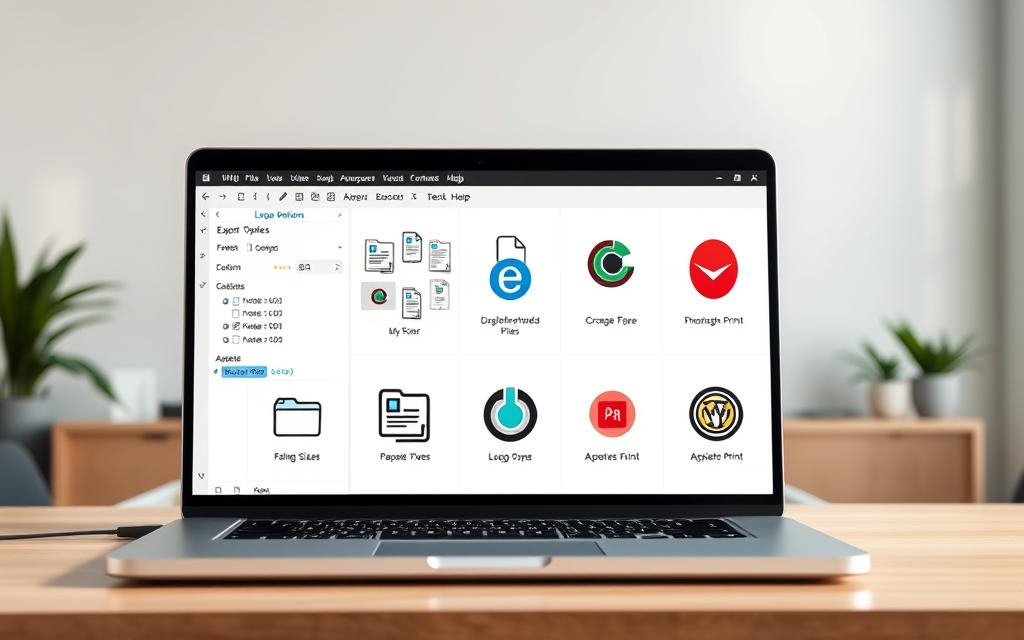
Download master files in vector EPS or SVG so the logo scales without loss of quality. Also export high‑resolution PNGs with transparent backgrounds for immediate use on dark or light headers.
Instant social readiness and packaged assets
Use the 21 pre‑sized social media versions supplied by many tools. These ensure crisp avatars, cover images and post graphics without manual cropping.
Build and store a brand kit
Compile colour codes, typography specs and approved logo lockups into a single brand kit. Store files with clear naming and version numbers so internal teams and partners can find the right asset fast.
Collateral and scale
Generate business cards, letterheads, presentations and seasonal variants from the asset library. Many platforms also offer social icons, animated formats and print templates for merchandise and web use.
Prepare for production
- Export print‑ready PDFs with outlined fonts and correct colour profiles.
- Sync assets with your website builder and email templates for consistent delivery.
- Run device and print proofs to check sharpness, contrast and colour fidelity.
Governance matters: decide who owns, updates and distributes the brand kit so standards hold as the brand scales.
Legal readiness and launch checklist
Before you launch, run clearance checks so the mark and name are original and defensible. This reduces the risk of look‑alikes and saves costly rework later.
Originality, distinctiveness and avoiding look‑alikes
Run trademark searches across relevant classes and marketplaces. Prioritise distinctiveness in symbol, wordmark and overall trade dress.
Validate visual choices against competitors and common category motifs so the logo stands apart for your target audience.
Trademark considerations for AI‑generated outputs
Assess whether the mark is eligible for registration. Prepare specimens showing real‑world use and choose correct classes for your company goods and services.
Document first use dates and keep export files and mockups as evidence for future filings.
Consistency on your website, packaging and social media
Establish usage rules: minimum sizes, clear space and approved colour variants to protect legibility and recognition across channels.
Implement a single repository for final files and brand guidelines, train staff and external agencies, and schedule periodic reviews.
“Monitor the market for infringements and maintain records of first use to support enforcement.”
- Run clearance checks and prioritise distinctiveness.
- Prepare trademark filings and specimens for registrations.
- Roll out assets on website, packaging and social media with clear rules.
- Keep a central repository and train teams to avoid brand drift.
- Consider international filings if the company will operate across borders.
Conclusion
Wrap up by validating originality, exporting master files and storing a single source of truth.
Recap the end‑to‑end journey: define identity, gather inspiration, pick style and type, run the generator, refine with focused prompts and export professional assets. This process makes logo creation faster and more cost‑effective while keeping quality high.
Build a compact brand kit now — include EPS/SVG masters, PNGs, 21 social sizes and usage rules so teams deploy assets consistently. Run clearance checks and prepare trademark filings before wide release.
Revisit the workflow as your audience changes and keep the mark updated with care. Apply the prompts and checklists here to turn one strong idea into a polished, scalable identity with confidence.
FAQ
What is the fastest way to get a professional logo for my company?
Use an AI logo generator on the web or mobile, enter clear brand details and style preferences, then choose from dozens of variations. Pick a design, tweak colours, fonts and spacing in the editor, and export high‑resolution files for web and print. This approach saves time and money compared with hiring a studio while still delivering quality outcomes.
Which files should I download for full brand use?
Export a vector file (SVG or EPS) for scalability, PNGs with transparent backgrounds for immediate use, and JPEGs for quick previews. Also download colour codes and a simple brand kit with typography and logo lockups so assets work across website, social media and print materials.
What inputs produce the best logo results from a generator?
Provide the brand name, any tagline, industry, target audience, preferred colours, font styles, and the logo type you want (wordmark, lettermark, pictorial, combination, etc.). Add example logos or mood‑board links for visual cues. Clear, specific prompts yield more on‑brand options.
How do I ensure the logo reflects my brand identity?
Define audience, competitors and positioning first. Clarify personality, values and mission, then pick visual cues — colours, fonts and tone — that match. Translate those choices into the generator prompt and iterate until the design aligns with your strategic brief.
Can I edit AI‑generated logos if they’re not perfect?
Yes. Most tools include editors for micro‑adjustments like kerning, proportions, icon scale and spacing. You can change colours, swap fonts, add outlines or shadows and preview mockups on business cards and social profiles before finalising.
Are logos from generators original and safe to trademark?
Many generators create unique combinations, but you must check for look‑alikes and ensure distinctiveness. Run trademark searches and consider consulting an IP lawyer before registering. Retain original source files and documentation showing your design brief and edits.
Which logo style should I choose for my industry?
Match style to brand story: classic or elegant for professional services, modern or minimalist for tech, playful or mascot for consumer products, vintage for artisanal brands. Test variations and ask real users which style communicates trust and relevance.
How do I test logo versatility across channels?
Create mockups for light and dark backgrounds, small favicon sizes, social media avatars and large banners. Check legibility at 16px and as a printed sign. Export multiple resized versions and review them on real devices and printed proofs.
What common prompt mistakes reduce design quality?
Vagueness (no audience or tone), conflicting directions (modern + ornate), or overloading with too many style demands. Fix these by simplifying the brief, prioritising one or two style traits, and supplying concrete examples or colour codes.
Which features matter when choosing an AI logo tool?
Look for customisation of fonts, colours and icons; high‑resolution and vector exports; transparent backgrounds; batch variations; social‑ready asset packs; and a clear licensing policy. Tools that offer brand kits and editable templates add extra value.
Can I scale beyond the logo with these tools?
Yes. Many platforms generate social media sizes, business card and stationery mockups, presentation templates and branded assets. Some integrate with website builders and print partners so you can launch a cohesive visual identity quickly.
How long does it take from brief to final assets?
From first brief to usable files can take minutes with a generator, but effective refinement and testing typically require a few hours to a couple of days. Allow time for user feedback, legal checks and final tweaks before publishing.
Are there cost differences between AI tools and designers?
AI generators are generally more affordable and faster, offering subscription or one‑time fees. Freelance or agency designers charge more for bespoke concepts, strategy and hand‑crafted refinements. Choose based on budget, speed and the level of originality required.
What should I include in a creative brief for the generator?
Provide brand name, tagline, industry, audience, key values, preferred colours, font styles and the desired logo type. Add competitor references, mood‑board links and any mandatory elements. A concise brief helps the tool generate relevant, high‑quality options.
How do I avoid copying other brands when researching trends?
Use mood boards to capture inspiration rather than exact replicas. Note common patterns, colours and layout cues in your category, then combine and adapt them into original concepts. Keep distinctiveness and legal clearance in mind throughout the process.
What final checks should I do before launching?
Verify vector export quality, test across sizes and backgrounds, confirm colour values, secure files and licences, conduct a trademark search, and ensure consistent use on website, packaging and social media. Have a rollout plan with updated profiles and print templates ready.


 By
By