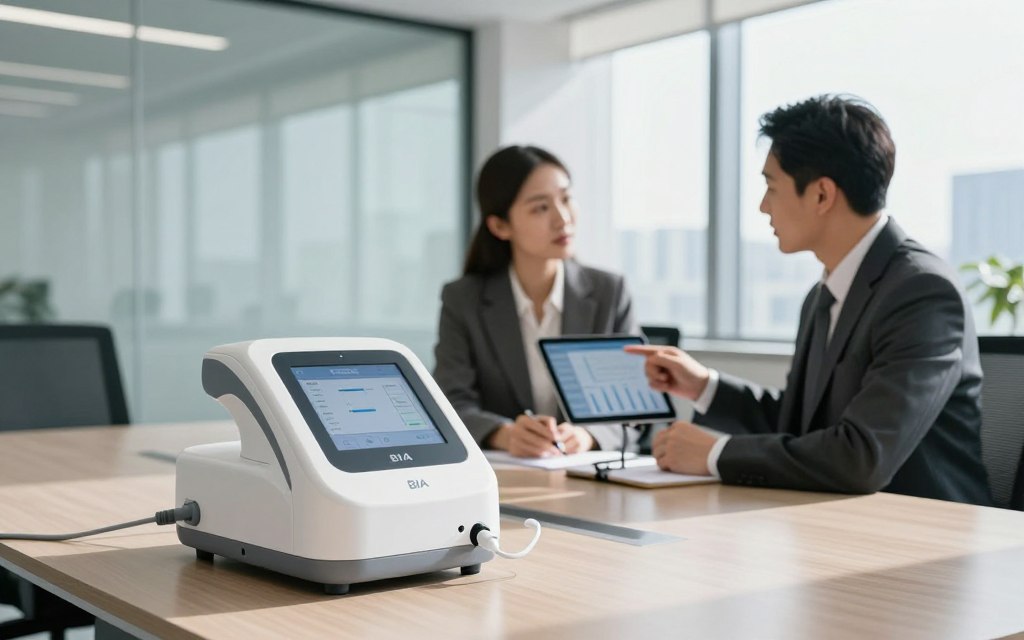

The BIA technology definition explains how bioelectrical impedance analysis estimates body composition. It sends a low-level electrical current through the body and measures resistance, or impedance. Water and fat levels affect impedance, helping BIA estimate body fat percentage, muscle mass, and total body water.
What is BIA technology? It supports health and fitness, but it can also mean business impact analysis elsewhere. This article explains the scientific principles behind bioelectrical impedance analysis and its healthcare and fitness applications. It also covers business continuity, benefits, limitations, and future trends.
BIA tools enable faster and more accessible decision-making. The accuracy of results depends on device quality, user conditions, and proper data interpretation. For a deeper understanding of BIA technology, read the science behind BIA technology.
Key Takeaways
- BIA measures body composition using low-level electrical currents.
- It provides insights into body fat, muscle mass, and hydration levels.
- The accuracy of BIA results relies on device quality and user conditions.
- Applications include healthcare, fitness, and business continuity analysis.
- Understanding BIA can enhance decision-making in health and wellness.
Understanding BIA Technology: A Comprehensive Overview
A BIA overview shows how this body composition technology turns physical measurements into useful data. Healthcare providers, fitness experts, and researchers use it for personal body composition insights. This supports data-driven healthcare because results can be measured and compared over time.
BIA technology estimates body fat percentage, fat-free mass, total body water, and visceral fat indicators. These measures help, but they are estimates, not direct laboratory results.
“BIA provides a practical solution for assessing body composition in a non-invasive manner.”
Why BIA Technology Matters in Today’s Data-Driven World
In a data-driven world, BIA technology can support better health decisions. It helps people track wellness and choose informed fitness and health strategies. Tracking changes over time supports a more personal approach to health management.
Industries and Sectors That Rely on BIA Technology
Many fields use BIA technology because it is flexible and effective. Key BIA industry applications include:
- Healthcare facilities, such as hospitals and outpatient clinics
- Sports and fitness centers, including gyms and wellness programs
- Research institutions focused on health and body composition studies
- Consumer health technology companies developing smart devices
As BIA technology evolves, its uses will grow. It will offer deeper insights into body composition and health management.
What Is BIA Technology? Defining the Core Concept
BIA technology changes body composition assessment through a noninvasive, low-amplitude alternating electrical current. This current travels through the body and measures impedance, or resistance to that current. The technical BIA definition explains its value in health and fitness.
The core parts include electrodes or conductive surfaces, a current source, and impedance sensors. These parts collect data for algorithm processing. User inputs, including height, weight, age, and sex, combine with impedance values to estimate body composition. These estimates support impedance analysis because water- and electrolyte-rich tissues, such as muscle, conduct electricity differently than adipose tissue.
Unlike other methods, BIA technology offers unique advantages beyond Body Mass Index (BMI), which considers only height and weight. Circumference measurements can change with technique, while hydrostatic weighing relies on underwater density. BIA also differs from DEXA scanning, which uses X-ray attenuation, and remains an estimation tool, not a standalone diagnostic method.
The Science and Mechanics Behind BIA Technology
Understanding BIA technology helps explain its uses. It applies bioelectrical impedance principles to assess body composition. Electrical signals interact with tissues and reveal health metrics.
Bioelectrical Impedance Principles Explained
BIA uses resistance and reactance to measure body impedance, with resistance opposing electrical flow through body fluids and tissues. Reactance reflects the capacitive properties of cell membranes. Together, these elements shape the impedance recorded during assessment.
Two main BIA systems are single-frequency and multifrequency. Single-frequency systems offer basic insights, while multifrequency systems provide more detail about fluid distribution. Impedance spectroscopy can provide a clearer view of hydration and body composition.
Data Collection, Processing, and Reporting Methods
BIA data collection follows a simple process. Users follow preparation instructions before contacting the device’s electrodes. A small electrical signal is sent through the body, and the device measures its impedance. Proprietary algorithms process the raw data and create a comprehensive report.
Key Measurement Parameters
BIA parameters measured during an assessment include:
- Resistance
- Reactance
- Phase angle
- Total body water
- Extracellular water
- Intracellular water
- Fat mass
- Fat-free mass
- Skeletal muscle estimates
Accuracy Calibration Standards
Ensuring BIA accuracy is crucial. Calibration standards involve several factors:
- Device calibration
- Electrode quality
- Stable environmental conditions
- Validated algorithms
- Comparison with accepted reference methods
Many factors can affect BIA results. Hydration, recent meals, exercise, skin temperature, posture, and alcohol consumption can change measurement accuracy. Standardized testing conditions support reliable outcomes.
Historical Development and Evolution of BIA Technology
Tracing the evolution of BIA technology shows a history of innovation and research. This BIA history began with early studies of electrical conductivity and tissue impedance. These studies showed how bioelectrical impedance could assess body composition, but basic electronics and narrow reference populations limited early use.
As research progressed, methods for measuring bioelectrical impedance improved greatly. Pioneering studies in the late 20th century established principles for advanced devices, including improved electrodes and complex data equations.
Early Origins and Pioneering Research
The early origins of BIA technology trace back to the 1960s. Researchers began testing electrical impedance in biological tissues during this period. This bioelectrical impedance research examined how body tissues responded to electrical currents and guided future innovations.
Modern Milestones and Technological Breakthroughs
In recent years, the evolution of BIA devices has accelerated sharply. Advances in microprocessors and digital signal processing made BIA technology more accessible and easier to use. Today, portable analyzers, handheld devices, and connected scales are common in clinical and personal settings.
Modern BIA technology uses multifrequency measurements and segmental analysis for deeper body composition insights. Cloud connectivity and mobile applications have expanded its reach, helping users track health metrics conveniently.
Greater access does not replace proper protocols or population-specific validation. Professional interpretation remains necessary for accurate assessments and scientific rigor, showing that progress means more than accessibility.
Primary Applications of BIA Technology Across Industries
BIA technology supports decisions across many sectors, including healthcare, fitness, and business continuity. These BIA use cases help organizations apply data effectively.
Healthcare and Medical Diagnostics
In healthcare, medical BIA applications support patient assessment. The technology helps with nutritional evaluation, fluid monitoring, and muscle-loss assessment. Healthcare professionals use bioelectrical impedance to track progress and tailor treatment plans with accurate, timely data.
Fitness, Wellness, and Body Composition
In fitness, BIA technology supports fitness body composition analysis. It tracks progress, personalizes training, and supports effective weight management. Consumers can use BIA devices to monitor themselves, reach health goals, and make informed decisions through consistent data.
Business Continuity and Risk Management
Another major BIA use involves business continuity planning, often called business impact analysis technology. This process identifies critical functions and dependencies, assesses potential disruptions, and prioritizes recovery efforts. Though separate from health and fitness, it shows how data-driven strategies maintain operational resilience.
| Application Area | Key Benefits | Examples |
|---|---|---|
| Healthcare | Nutritional assessment, fluid monitoring | Patient follow-up, treatment evaluation |
| Fitness | Progress tracking, personalized training | Weight management, self-monitoring |
| Business | Risk identification, recovery prioritization | Operational impact analysis, compliance |
Each application benefits from consistent data collection and analysis, supporting better outcomes and informed decisions. For business growth, explore this resource.
BIA Technology in Healthcare and Clinical Settings
In healthcare, BIA technology supports BIA patient assessment and monitoring. It gives clinicians key body-composition data to guide treatment decisions. By tracking fat mass, lean mass, and total body water, providers can tailor care to each patient.
Clinical Use Cases for Patient Assessment
Clinical BIA is used in nutrition support, oncology, nephrology, cardiology, geriatrics, and rehabilitation. In oncology, BIA can track body composition during treatment and reveal the patient’s nutritional status. In nephrology, BIA can monitor fluid status and help manage patients with kidney disease.
Assessing phase angle, a measure of cellular health, provides valuable information for further evaluation. Regular BIA assessments can reveal trends that suggest complications or needed care-plan changes, supporting chronic disease management.
Preventive Care and Long-Term Health Monitoring
Preventive health monitoring is another key use of BIA technology. Repeated measurements help clinicians track recovery, nutrition treatments, and rehabilitation progress. This approach helps older adults who may experience age-related muscle loss.
Tracking these changes over time lets providers act quickly, which may improve outcomes and quality of life.
Integration With Electronic Health Records
Integrating BIA readings with BIA electronic health records (EHR) systems increases this technology’s value. Connected devices can send readings to EHR systems through application programming interfaces or structured clinical documentation. This process streamlines workflow and supports comprehensive patient care.
Data governance, patient consent, interoperability, and cybersecurity protect patient information. Clinicians must interpret BIA results with medical history, physical exams, laboratory tests, and imaging studies. Consistent timing, hydration status, and device placement also matter when documenting BIA measurements.
BIA Technology for Business Continuity Planning
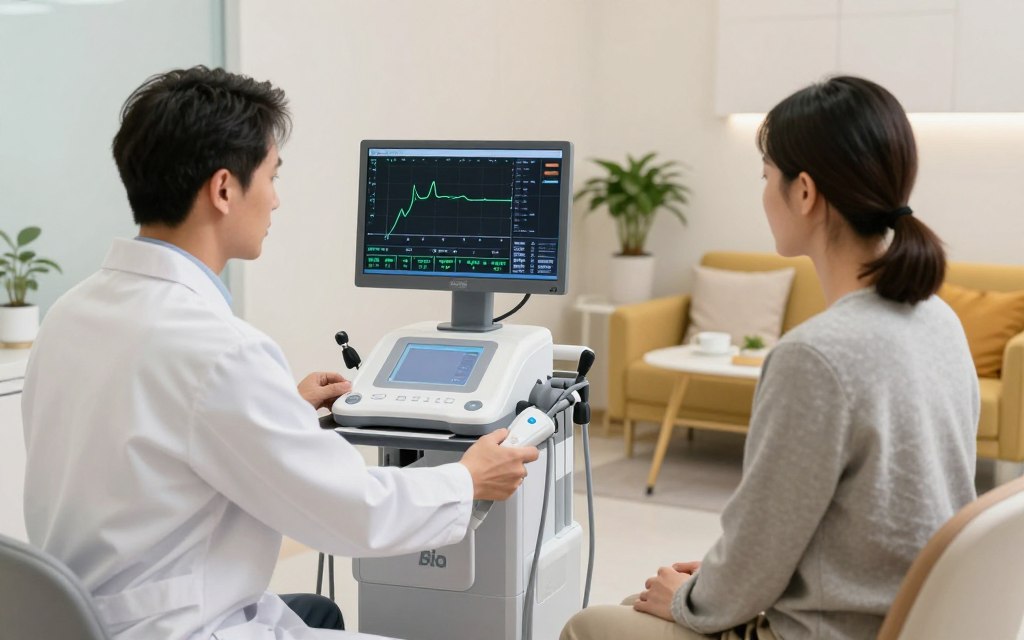
Business impact analysis (BIA) technology supports effective risk management in business continuity planning. BIA business continuity tools include software, data platforms, templates, workflow tools, and reporting systems. They help organizations assess the possible effects of disruptions across their operations.
Teams using operational impact analysis identify critical business functions and their dependencies. They assess personnel, facilities, technology, suppliers, records, and communication channels. Then, they estimate operational, financial, legal, regulatory, reputational, and customer impacts over time.
Teams establish key metrics: recovery time objectives (RTO), recovery point objectives (RPO), maximum tolerable downtime (MTD), and prioritized recovery sequences. These metrics guide the organization through potential crises.
Regulatory Compliance and Industry Standards
Documented assessments support compliance with industry regulations. Organizations must review assumptions, assign ownership, and preserve audit evidence regularly. These practices support compliance and improve responses to disruptions.
Alignment With FEMA and ISO 22301 Frameworks
Aligning BIA processes with FEMA continuity guidance supports FEMA business continuity planning. It also aligns with ISO 22301 business continuity management principles. Successful alignment depends on the organization’s scope, controls, and implementation strategies.
Software can support these processes, but it cannot replace executive ownership, cross-functional workshops, testing, or ongoing plan maintenance.
BIA Technology in Fitness and Body Composition Analysis
BIA technology is changing fitness and body composition analysis. It gives people useful insights through consumer-grade devices and BIA smart scales. These tools estimate body weight, body fat, muscle mass, and water content for easier body composition tracking.
Consumer BIA devices, including smart scales and handheld analyzers, are popular because they are convenient. Mobile apps show users progress and trends over time. Key strengths include:
- Convenience: Easily accessible for frequent measurements.
- Behavioral Feedback: Encourages healthy habits through regular tracking.
- Trend Analysis: Helps users see changes over time rather than focusing on single readings.
However, consumer BIA devices have limits. Hydration, measurement timing, foot placement, and brand differences can affect accuracy. For best results, use consistent conditions and choose devices validated for specific needs.
In professional settings, BIA supports athletic performance analysis. Coaches, sports dietitians, and athletic trainers use segmental or multifrequency BIA to monitor:
- Training responses
- Recovery
- Body composition goals
- Weight-class management
Athletes should review BIA results with performance data, nutrition records, and recovery indicators. By tracking trends instead of single readings, athletes can make informed training and nutrition choices.
Key Benefits of Implementing BIA Technology
Organizations can gain several benefits of BIA technology, including better efficiency and accuracy. This data analysis method offers useful advantages across many sectors. These strengths make BIA technology valuable for daily decisions.
Accuracy and Reliability Advantages
BIA technology can deliver accurate, reliable results when devices are validated and protocols are standardized. It provides useful, repeatable estimates and helps users track changes over time. Though each result may not be perfectly precise, strong BIA reliability supports informed decisions.
Cost-Effectiveness and Operational Efficiency
BIA technology offers cost-effective body composition analysis compared with advanced imaging methods. It needs less equipment and staff, so more organizations can use it. Quick, noninvasive tests assess more people in clinics, gyms, and wellness programs while improving workflows and resource use.
Scalability Across Diverse Use Cases
BIA technology scales from individual monitoring to population health programs and remote care workflows. Scalable BIA solutions can serve athletic teams, enterprise reporting, and other specific needs. Digital records and automated trend views streamline data management and analysis.
| Benefit | Description | Impact |
|---|---|---|
| Accuracy | Provides repeatable estimates when validated | Informed decision-making |
| Cost-Effectiveness | Lower equipment and staffing needs | Improved resource allocation |
| Scalability | Supports diverse applications | Adaptable to various organizational needs |
Comparing BIA Technology to Alternative Methods
Understanding body composition testing methods requires comparing each approach. This BIA vs DEXA comparison also covers manual risk assessment techniques. Each method has unique strengths and suits different situations.
BIA Technology vs. DEXA Scanning
BIA (Bioelectrical Impedance Analysis) and DEXA (Dual-Energy X-ray Absorptiometry) serve different body assessment needs. DEXA is widely known for accurate bone density and regional body composition measurements. However, it uses low radiation levels and needs special equipment, limiting routine access.
By contrast, BIA is more portable and easier to use. It gives quick results without radiation and works in clinical settings and fitness centers. DEXA gives detailed insights, but BIA offers speed, ease, and repeated measurements over time.
BIA Technology vs. Manual Risk Assessment Approaches
Manual risk assessment methods often use questionnaires, interviews, and expert judgment. They can provide useful insights but may be less consistent and efficient than BIA technology. In business continuity planning, BIA software improves collaboration and dependency mapping over traditional manual processes.
Expert interviews and facilitated workshops remain vital for uncovering operational realities. BIA technology can streamline data collection and reporting, supporting accuracy and compliance with regulatory expectations. Ultimately, choose between BIA and manual methods based on intended use, required accuracy, and available resources.
Both BIA technology and DEXA scanning have important strengths. The decision should consider measurement frequency, budget constraints, and the needed level of detail. Understanding each method supports a BIA comparison and helps users choose the right tool for their specific needs.
Future Trends and Innovations in BIA Technology
AI in BIA will help shape the future of BIA technology. These tools can improve algorithms, body composition checks, and risk management strategies. By studying larger, more diverse datasets, AI can find patterns and create estimates for specific populations.
Personalized reference models are a promising development. These models can adjust to personal traits and provide more precise health assessments. AI can also detect unusual data changes that may signal health issues.
Machine learning body composition tools can support trend forecasts over time. Automated quality checks can protect data integrity and make BIA technology more reliable. Connections with wearable devices, nutrition apps, and clinical data can improve the user experience.
For business continuity, AI can identify dependencies within operational processes. By summarizing risks and tracking changes, AI can suggest timely plan updates while people oversee critical decisions.
Emerging applications of BIA technology include:
- Remote patient monitoring
- Home-based rehabilitation
- Digital therapeutics
- Precision fitness programs
- Connected enterprise resilience platforms
BIA market trends include growth from an aging population, preventive care, and consumer health adoption. Cloud connectivity is also increasing demand for faster risk analysis.
These innovations need strong safeguards, including bias tests, clear reports, and user privacy protection. Cybersecurity and regulatory reviews will help validate AI applications against suitable reference standards.
| Innovation | Description | Impact |
|---|---|---|
| Personalized Reference Models | Models tailored to individual characteristics | Increased accuracy in assessments |
| Anomaly Detection | Identifying unexpected data changes | Early health issue detection |
| Longitudinal Trend Forecasting | Monitoring changes over time | Improved long-term health strategies |
| Integration with Wearables | Combining data from various sources | Enhanced user experience and insights |
Conclusion
This section gives a what is BIA technology summary and explains its two uses. In healthcare, bioelectrical impedance analysis (BIA) quickly estimates body composition without invasive procedures. In business, BIA evaluates how disruptions affect operations, showing BIA technology benefits for many sectors.
In healthcare and fitness, BIA applications track health trends and assess body composition. Their speed and portability help professionals and consumers. For business continuity, BIA helps prioritize risks and plan recovery, strengthening operations.
Choosing BIA technology requires careful review of its purpose, validation evidence, and integration needs. Organizations should consider their population, budget, and available professional oversight. Validated tools and secure data handling support accurate, tailored BIA solutions.


 By
By